How to Draw Eye Expressions Step by Step
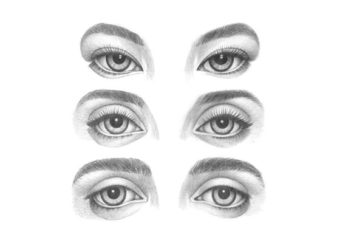
This tutorial shows how to draw 9 different eye expressions. It explains how the eyes tend to change with each expression and provides 6 drawing steps for each example.
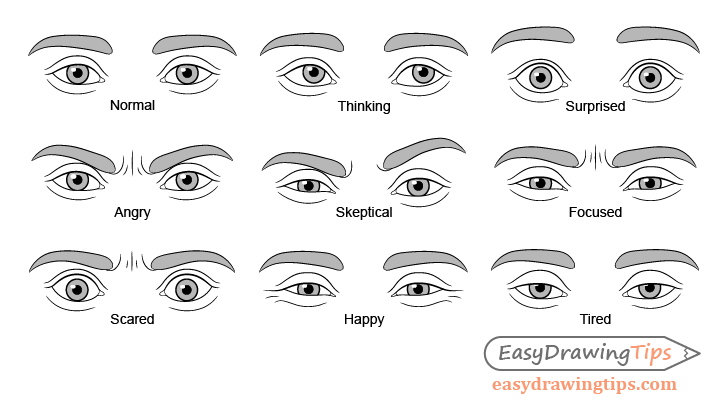
As shown above, the expressions included in the tutorial are:
- Normal
- Thinking (can also be daydreaming)
- Surprised (can also be scared)
- Angry
- Skeptical (can also be plotting)
- Focused
- Scared
- Happy
- Tired (can also be sad)
Please note that because this tutorial focuses on conveying certain expressions, the examples show somewhat simplified drawings of the eyes. For drawing eyes with more detail, see:
While the provided examples are fairly simple, it’s still recommended that you do the tutorial in pencil and make light lines that can be easily erased in case of a mistake. The lines in the examples are dark simply so that they are easier for you to see. You can darken your lines in the last step of the drawing before adding the shading.
It’s also highly recommended that you read over the drawing instructions for the normal expression even if you don’t plan on drawing it. They provide some information that is not included in the other examples (to avoid repetition).
Supplies Needed for Drawing These Eye Expressions
- Regular Pencil: An HB pencil for the initial line drawing and shading.
- White Paper: Drawing paper or standard printer paper.
- Eraser: A regular vinyl or rubber eraser.
- Fine-Point Black Marker (recommended): For getting black outlines similar to those shown in the examples.
- Drawing Tablet and Digital Software (alternative): Allows for easy black outlines and solid grays like those in the examples.
Eye Spacing When Drawing Eyes
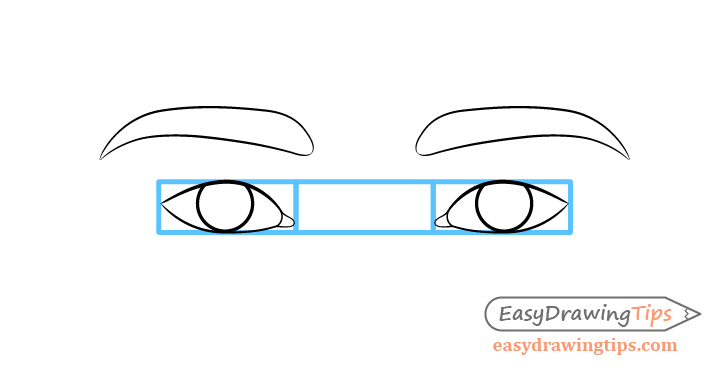
One important thing to be aware of before drawing any of the expressions below is the spacing between the eyes. Generally, this should be enough to fit another eye in between them (as shown in the above example). Remember that this space also includes the width of the tear duct.
Finally, also keep in mind that the distance between the eyes should remain the same regardless of the expression.
How to Draw Normal Eyes Step by Step
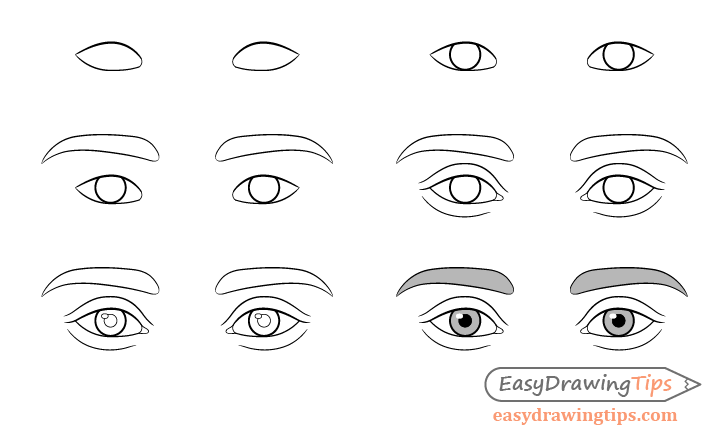
This first drawing is of the eyes in their natural relaxed state. The example is what the rest of the expressions in this tutorial are based on.
Step 1 – Draw the Outlines of the Eyes
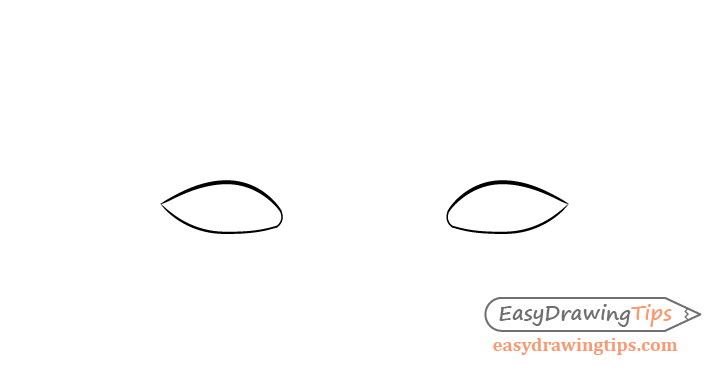
Begin with the outline of the white of each eye without any of the other details.
The shapes and angles of the eyes can vary between different people. In this case, they are angled slightly downwards towards the nose.
For drawing different types of eyes, see:
How to Draw Different Eye Types Step by Step
Be careful to position both eyes on the same level so that one is not too high or too low in relation to the other. You can optionally draw a straight horizontal line right above where you want to draw the eyes to help you achieve this.
Step 2 – Draw the Irises

Inside the outline of each eye, draw the irises with their tops slightly covered by the upper eyelids and their bottoms just touching the lower eyelids.
Again, this can change depending on the person, but generally, drawing the irises in such a way will help show relaxed eyes in their normal state.
Step 3 – Draw the Eyebrows
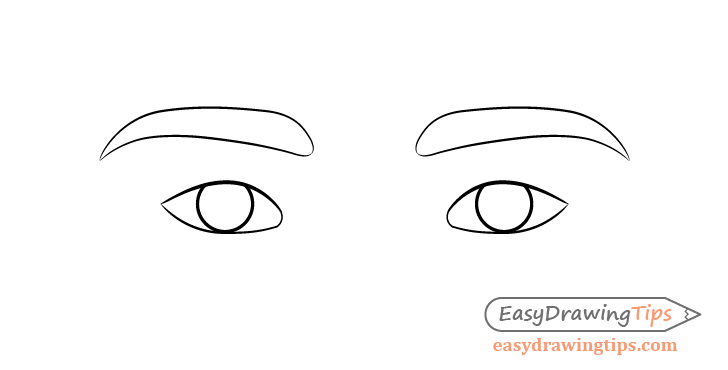
Just like the eyes, the shape of the eyebrows can also change from person to person. Usually, however, eyebrows tend to be thicker towards their inner ends and thinner towards their outer ends. Also, towards the outer ends, they tend to have a bit of a bend in their shape.
Taking these things into account, draw the eyebrows just a little bit above the eyes as shown in the example.
For more detailed examples of different types of eyebrows, see:
How to Draw Eyebrows Step by Step
Step 4 – Draw the Eyelids
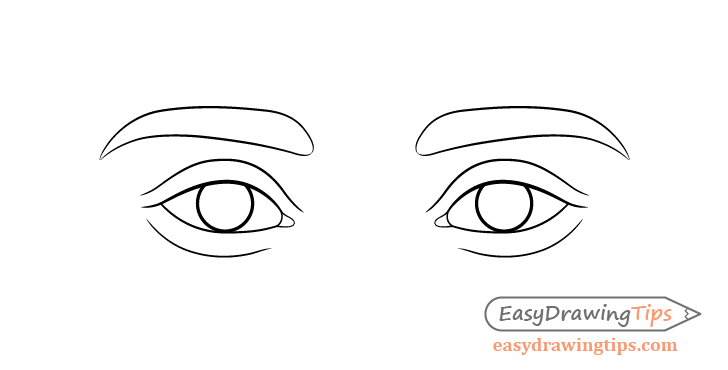
It’s important to note that the lines that outline the whites of the eyes are technically the eyelids also. When this tutorial refers to the “eyelids”, it’s actually talking about the top of the upper eyelids and the bottom of the lower eyelids. The reason for this is to simply keep the steps a little more organized and to avoid some repetition.
For a fairly basic drawing of the eyelids, simply add a pair of curves to show the upper and lower eyelid of each eye, as can be seen in the example above.
As the eyes in the drawing are simplified, there is no need to add individual eyelashes. You can, however, extend the upper outlines of the eyes to go past their outer corners. You can also make these lines slightly thicker to create the impression of eyelashes.
Step 5 – Draw the Pupils & Highlights
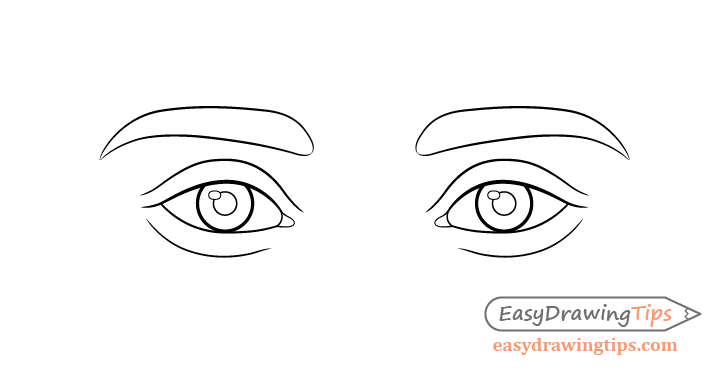
To finish the line drawing, add the pupils as well as a pair of highlights (one for each eye).
Position the pupils directly in the center of the irises. The position and shape of the highlights can vary depending on the light source and other factors. As the focus of the tutorial is on showing eye expressions, it will not go into this in too much detail. Simply make the highlights oval in shape and draw them slightly overlapping the pupils (as is often the case).
Step 6 – Add Shading

Even a little bit of shading can help a drawing stand out. To finish, add some as shown in the example. Before doing this, you can also trace over your lines with a darker stroke (or a fine-point black marker). As mentioned earlier, make the lines that define the upper part of the whites of the eyes thicker to create an impression of eyelashes. You can also give a slightly thicker outline to the irises.
For the shading, fill in the pupils with black (or very dark pencil shading) and make the irises and eyebrows a dark grey (keep the little highlights white).
Once done, you should have a basic drawing of the eyes with some very simple shading.
How to Draw Thinking Eyes Step by Step
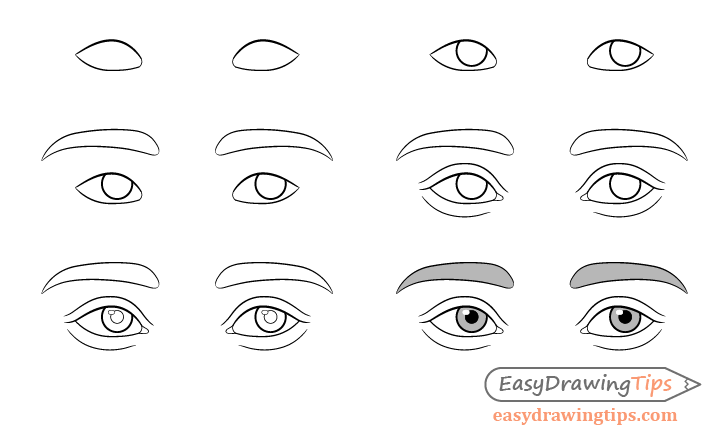
This expression shows “thinking” eyes, like when a person is trying to make a decision or remember something.
Step 1 – Draw the Outlines of the Eyes
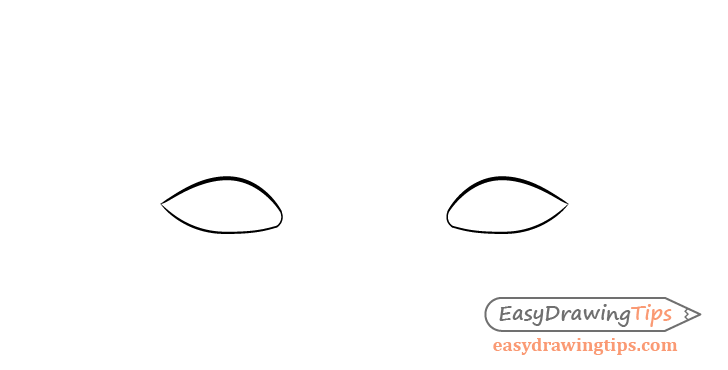
Begin with the outline of the whites of the eyes. You can draw these the same as you would for a normal expression.
Step 2 – Draw the Irises
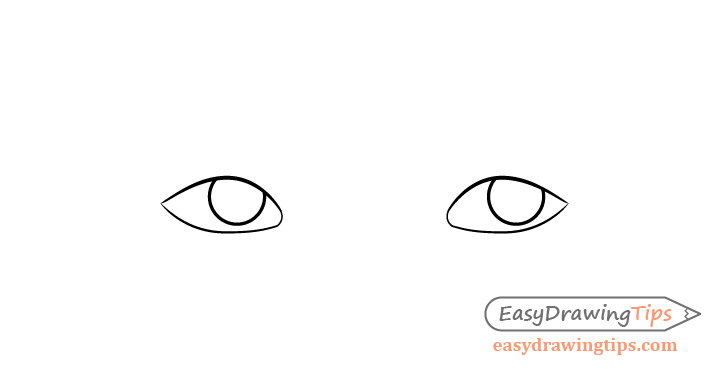
Draw the irises rolled upwards and to one side. A good part of them should be covered by the upper eyelids.
Step 3 – Draw the Eyebrows

Draw the eyebrows very slightly raised compared to the normal expression, especially their inner ends.
Step 4 – Draw the Eyelids
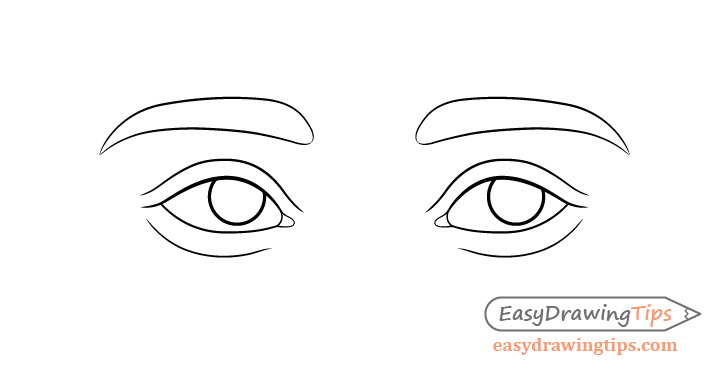
Draw the eyelids the same as you would for a normal expression.
Step 5 – Draw the Pupils & Highlights
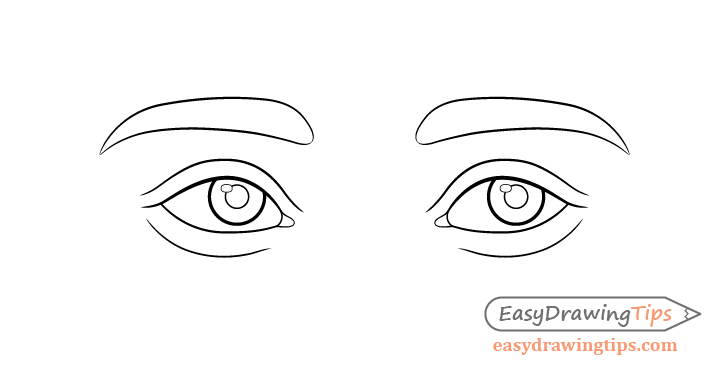
Add the pupils in the center of each of the irises and afterwards add the highlights.
Step 6 – Add Shading
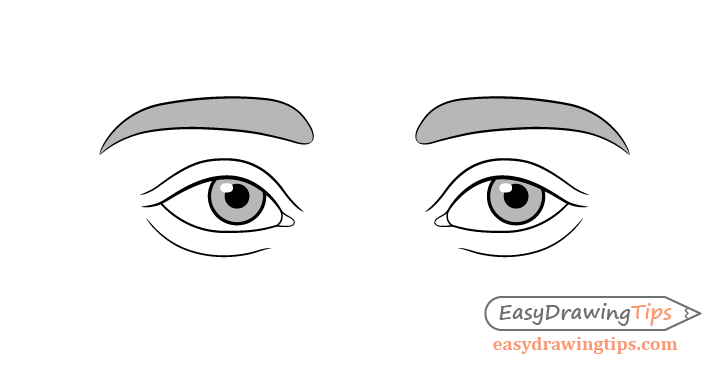
Finally, darken your lines and add some basic shading as explained in the first example.
How to Draw Surprised Eyes Step by Step
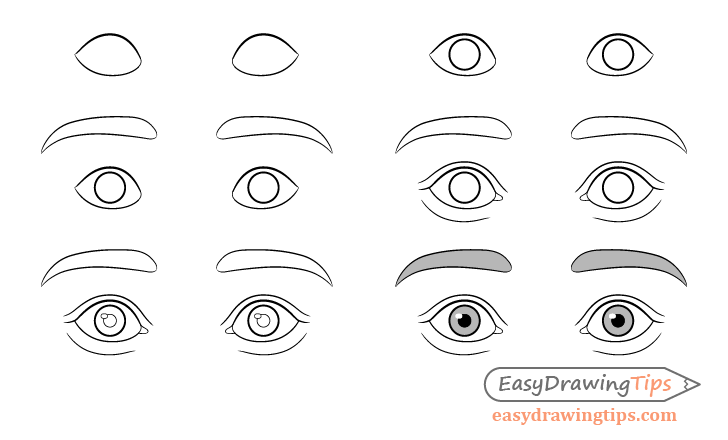
This drawing of the eyes shows a surprised expression. It can also be used to show a scared expression, although there is also a different variation of a scared expression shown later on in the tutorial.
Step 1 – Draw the Outlines of the Eyes
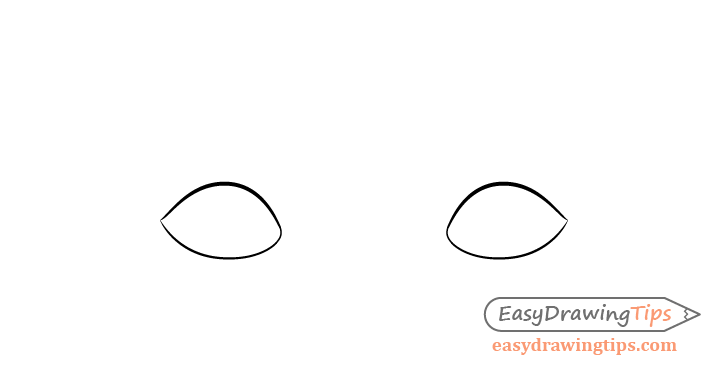
For this expression, draw the eyes wide open. Make them vertically much wider than for a normal expression. However, don’t overdo this, as you can end up with eyes that look like they belong to a cartoon character.
Step 2 – Draw the Irises
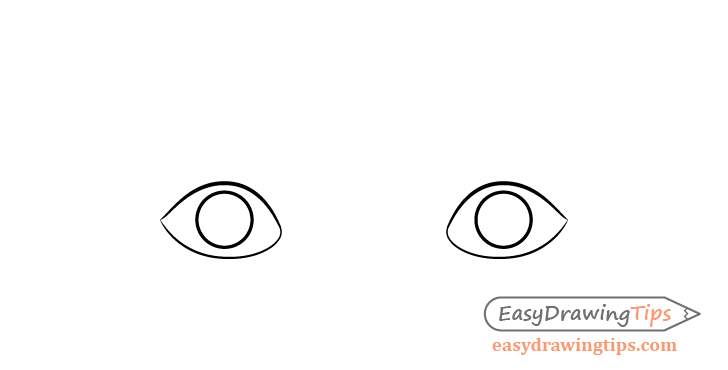
Draw the irises not touching the upper or lower eyelid. This is very important as it will help create the surprised look.
Step 3 – Draw the Eyebrows
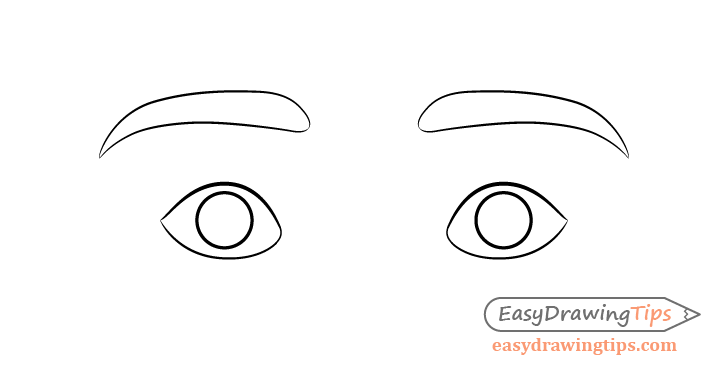
Draw the eyebrows raised. In addition to simply drawing the eyebrows higher up, you should also draw their inner ends significantly raised in comparison to a normal expression.
Step 4 – Draw the Eyelids
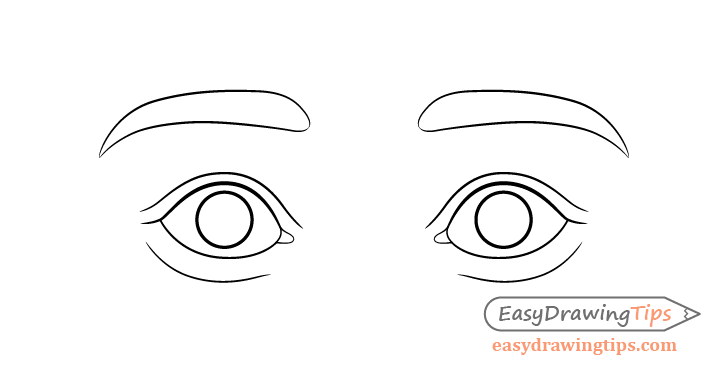
Draw the line that defines the upper eyelids higher up than you would for a normal expression. However, the distance between them and the whites of the eyes should also be narrower than normal.
You can draw the line for the lower eyelids just a tiny bit lower down.
Step 5 – Draw the Pupils & Highlights
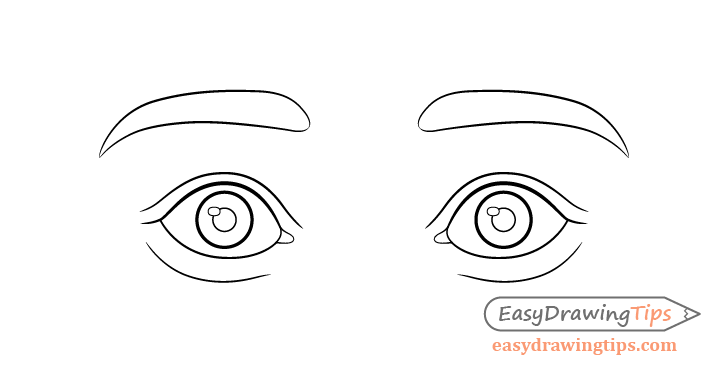
Draw the pupils in the middle of the irises the same as you would for a normal expression and then add the highlights.
Step 6 – Add Shading
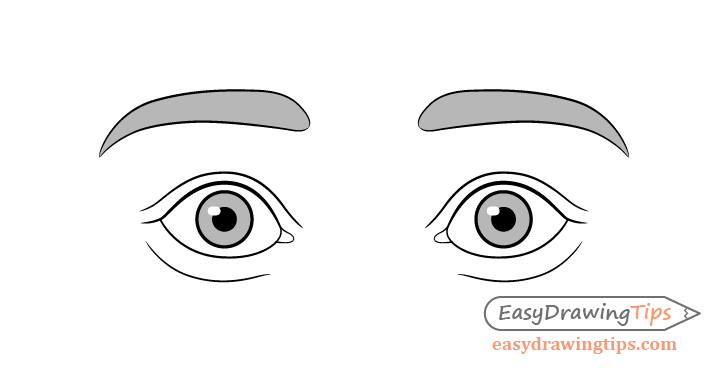
To finish, darken your lines and add some basic shading as described in the first example.
How to Draw Angry Eyes Step by Step
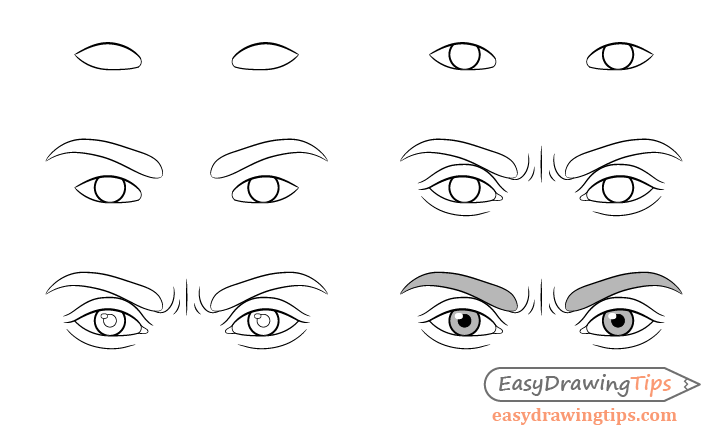
This drawing is of an angry or unhappy expression, but a similar setup can also be used for a serious expression.
Step 1 – Draw the Outlines of the Eyes
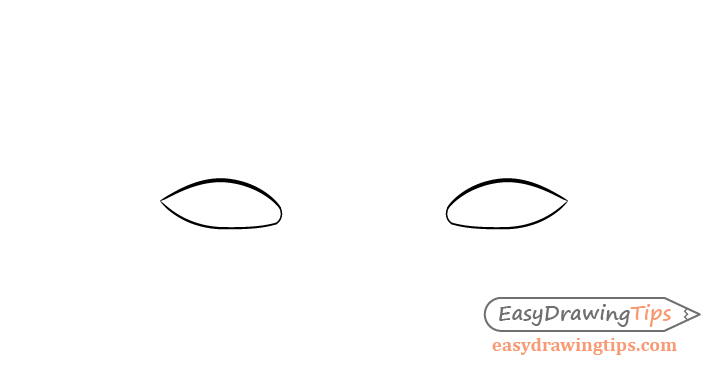
Draw the outlines of the eyes slightly vertically narrower than you would for a normal expression.
Step 2 – Draw the Irises
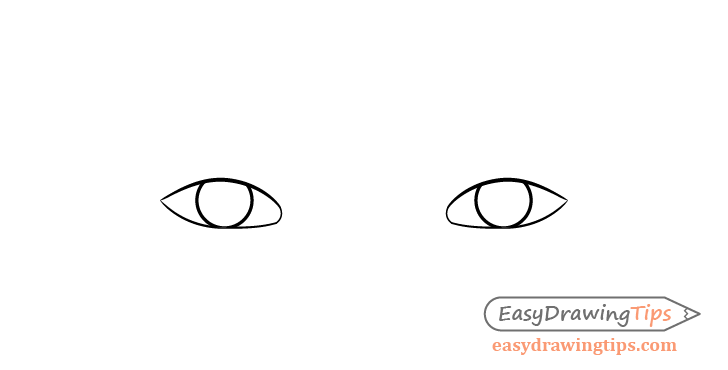
As the eyes are drawn slightly narrower, the irises should also be a tiny bit more covered by the eyelids than in a normal expression.
Step 3 – Draw the Eyebrows
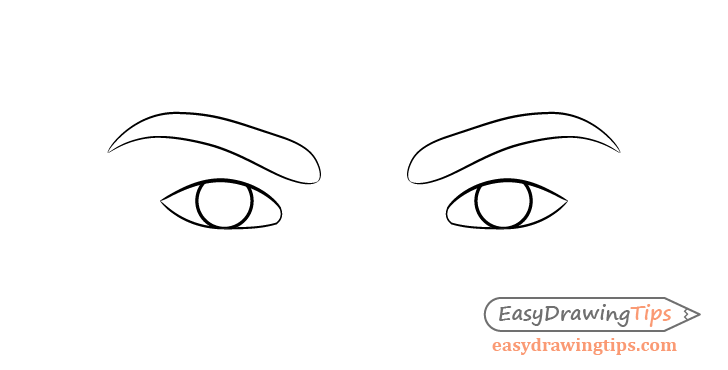
Draw the eyebrows lower down with their ends lowered even further, forming a bit of a wave in their overall shapes.
Step 4 – Draw the Eyelids & Wrinkles

Draw the eyelids with their upper outlines slightly lowered and their lower outlines slightly higher up.
As the eyebrows are pushed downwards, the skin around their inner corners will wrinkle. The number and pattern of the wrinkles can change from person to person. In this case, you can draw one big wrinkle down the middle and two more large wrinkles wrapping around the inner shape of the eyebrows. You can then add a pair of smaller wrinkles in between them.
Step 5 – Draw the Pupils & Highlights

Draw the pupils in the middle of the irises being slightly overlapped by the highlights.
Step 6 – Add Shading
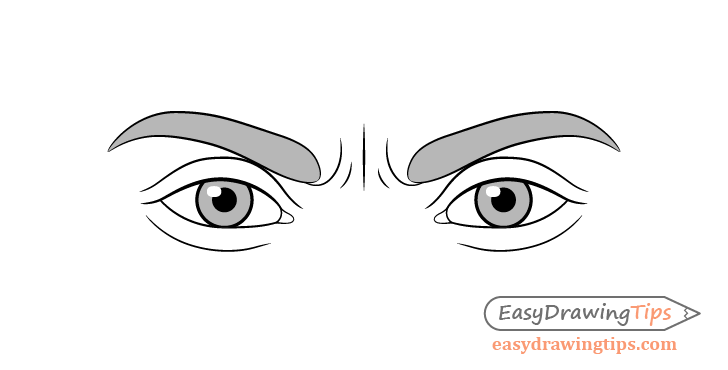
Finally, darken your lines and add some basic shading as explained in the first example.
How to Draw Skeptical Eyes Step by Step
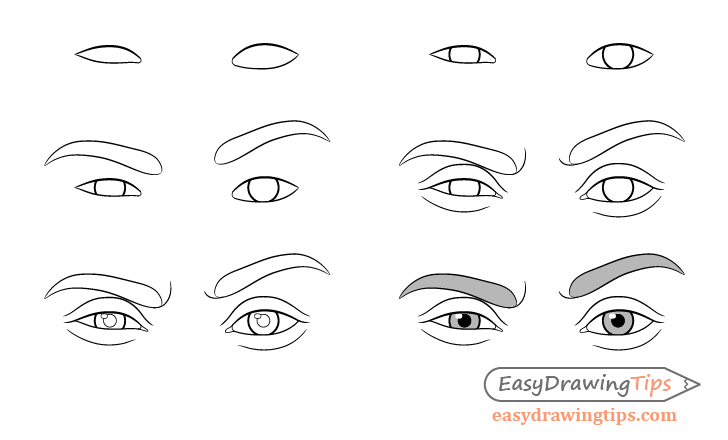
The “skeptical” expression is somewhat different from the other examples in this tutorial as it will have the two eyebrows in different positions.
Step 1 – Draw the Outlines of the Eyes
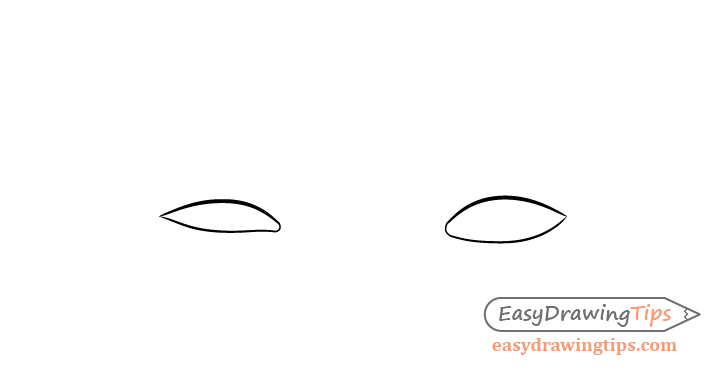
For this expression, draw one eye much narrower and the other one just slightly so.
Step 2 – Draw the Irises
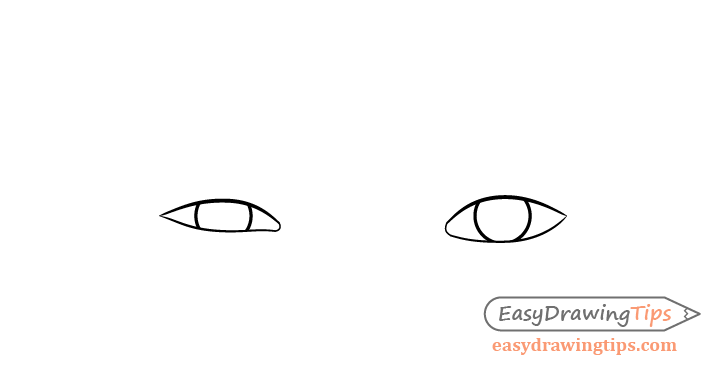
Draw the irises with a large part of the one in the squinted eye covered by the eyelids. The one in the other eye should also be slightly more covered by the eyelids than in a normal expression.
Step 3 – Draw the Eyebrows
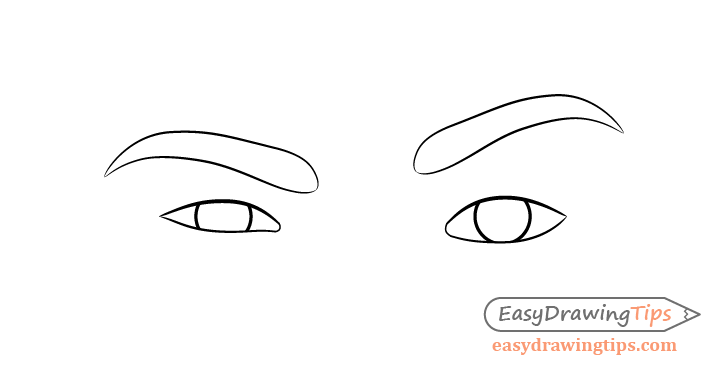
Draw the eyebrows with the one over the narrowed eye lowered, especially its inner end. Draw the outer end of the second eyebrow raised and its inner end lowered (compared to a normal expression).
Step 4 – Draw the Eyelids & Wrinkles
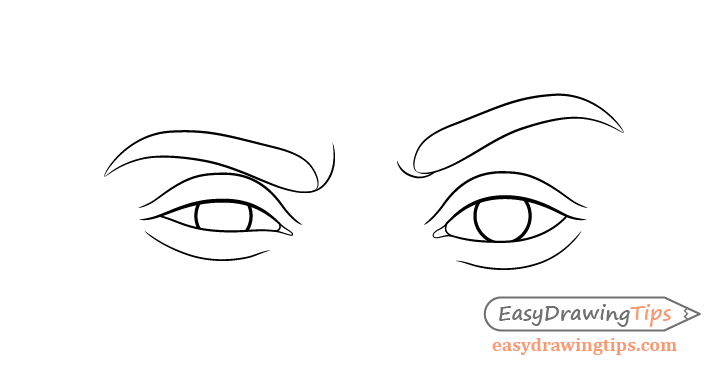
Draw the upper eyelids in pretty much the same place as for a normal expression for both eyes. Draw the lower eyelid over the squinted eye slightly raised (pulled up).
Next, you can add just a hint of wrinkles around each of the eyebrows.
Step 5 – Draw the Pupils & Highlights
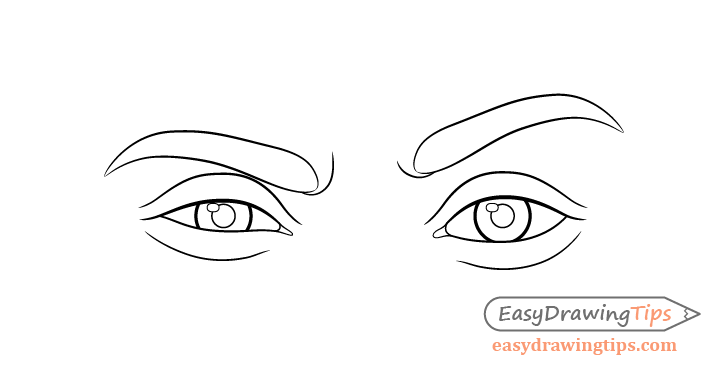
In the middle of each iris, draw the pupil and afterwards add the highlights.
Step 6 – Add Shading
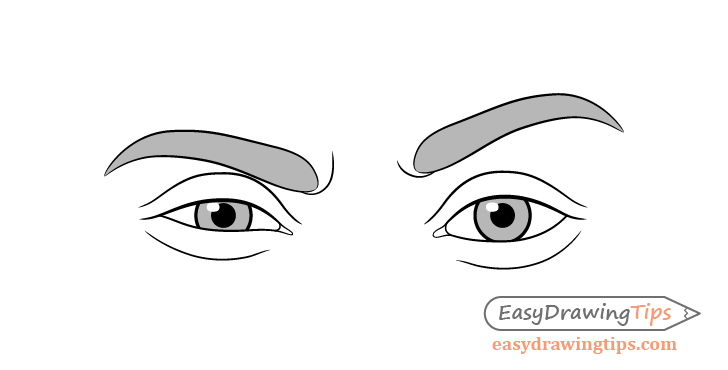
Finish by darkening your lines and adding some simple shading. You can again refer to the first example of the tutorial for details.
How to Draw Focused Eyes Step by Step
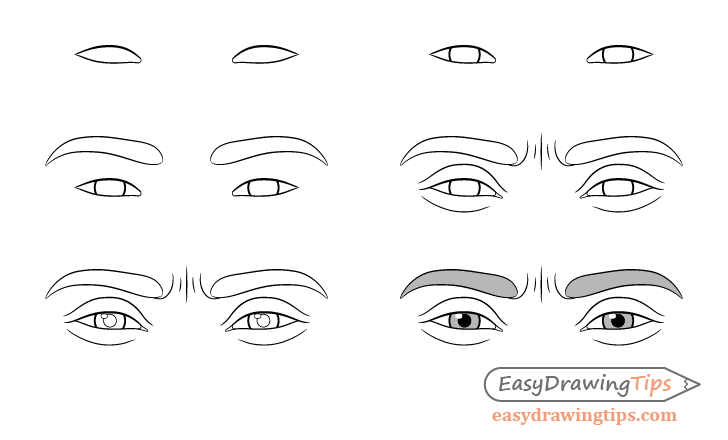
This eye expression can be used to show focused or deeply thinking eyes. While the thinking expression shown earlier can be more of a daydreaming look, this one is more for showing someone who is trying to solve a problem.
Step 1 – Draw the Outlines of the Eyes
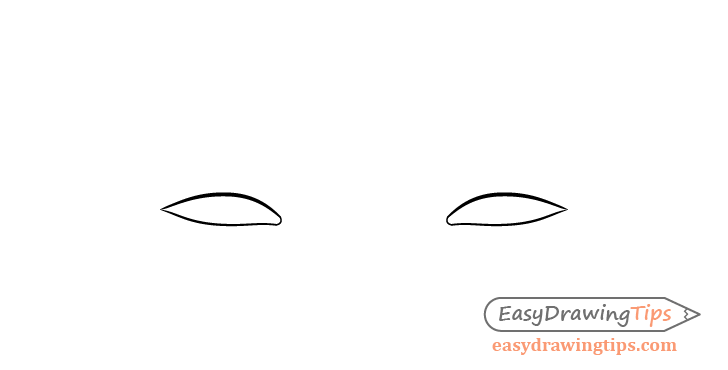
For eyes with a “focused” expression, draw their outlines much narrower than normal.
Step 2 – Draw the Irises
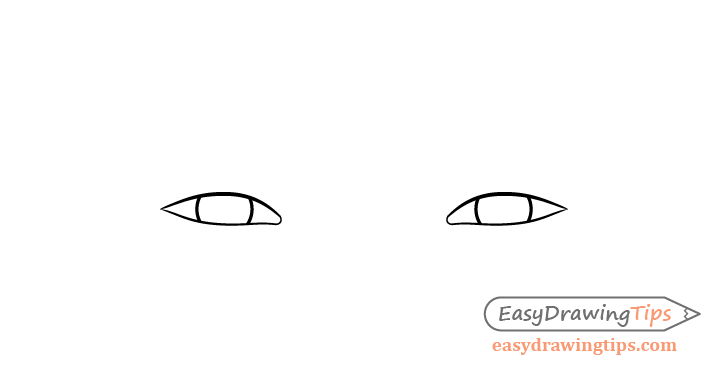
Draw the irises with a good portion of their tops and bottoms covered by the eyelids.
Step 3 – Draw the Eyebrows
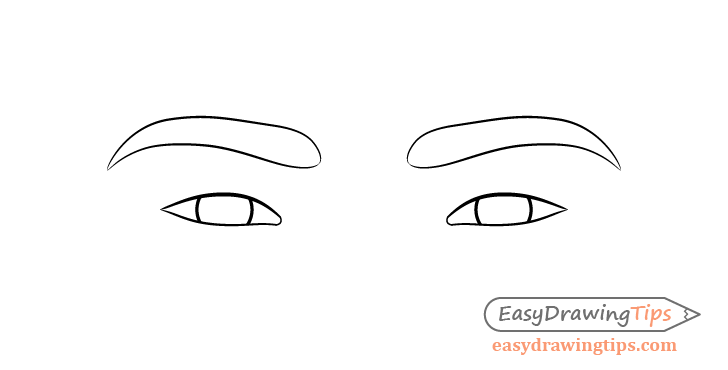
Draw the eyebrows lower down (particularly their inner ends) and slightly closer together than normal.
Step 4 – Draw the Eyelids & Wrinkles
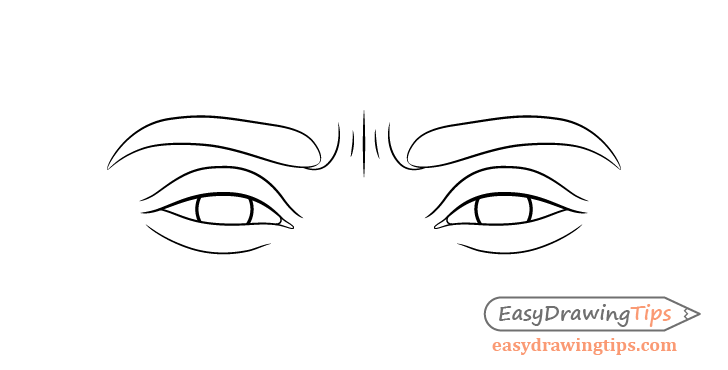
Draw the eyelids with their upper outlines a tiny bit lower and the lower outlines slightly raised (pulled up by the squinting of the eyes).
Similar to the previous example of “angry eyes”, draw some wrinkles in between the eyebrows. However, in this case, make the wrinkles slightly more vertical in their direction as the eyebrows are more squeezed together with this expression than pushed down.
Step 5 – Draw the Pupils & Highlights
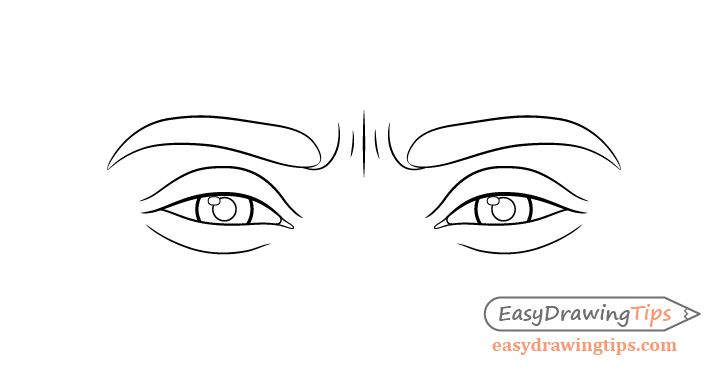
Draw the pupils in the middle of the irises slightly overlapped by the highlights.
Step 6 – Add Shading
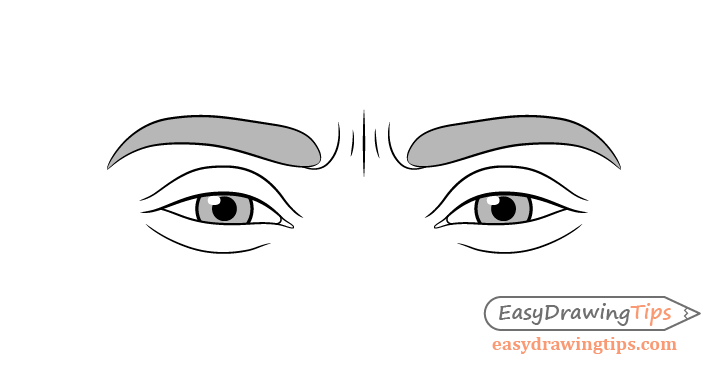
Finally, darken your lines and add some basic shading to finish the “focused eyes” drawing.
How to Draw Scared Eyes Step by Step
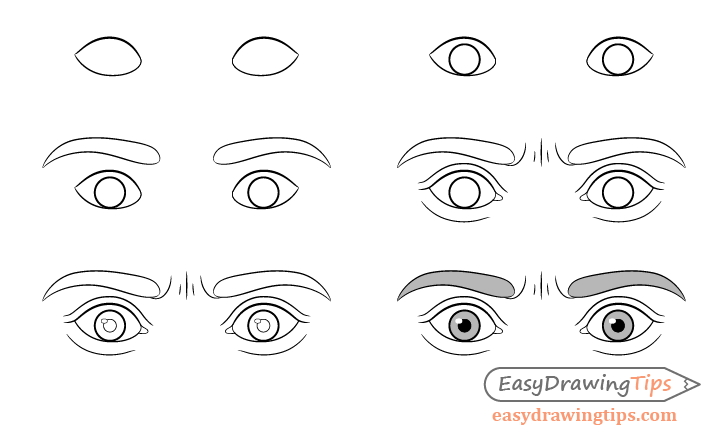
The scared eye expression is somewhat similar to the surprised one but with a few important differences.
Step 1 – Draw the Outlines of the Eyes
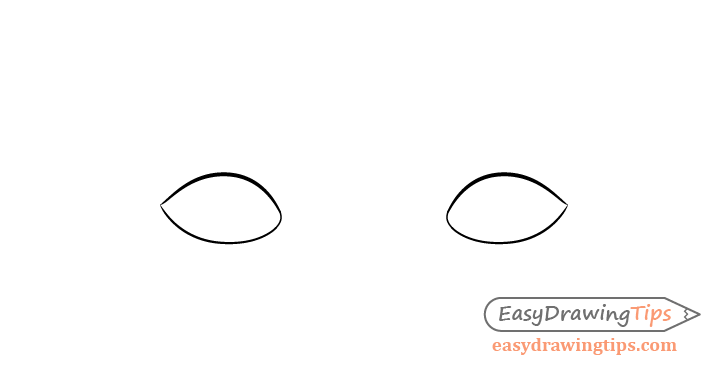
Draw the outlines of the whites of the eyes wider than normal.
Step 2 – Draw the Irises
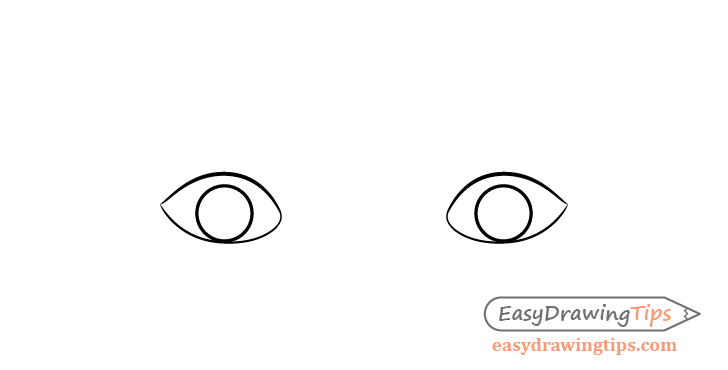
Draw the irises touching the lower eyelids with some space between them and the upper eyelids. The eyes should be looking slightly downwards.
Step 3 – Draw the Eyebrows
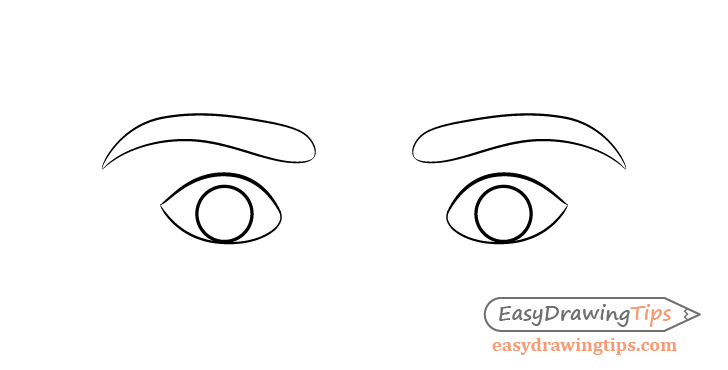
Draw the eyebrows slightly lowered, especially their inner ends. You can also draw them a tiny bit closer together than normal.
Step 4 – Draw the Eyelids & Wrinkles
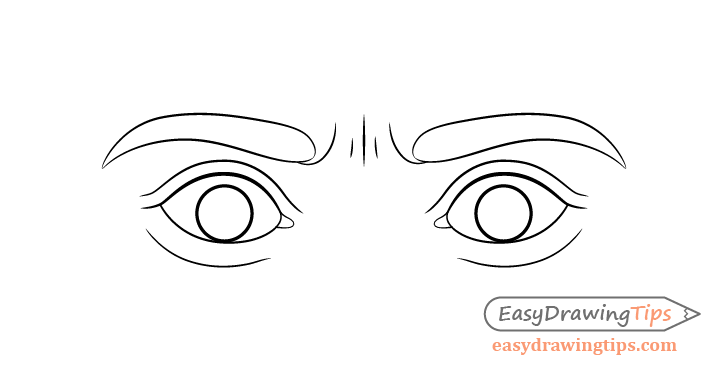
Draw the lower eyelids in pretty much the same place as for a normal expression.
Draw some wrinkles in between the eyebrows similar to the angry/focused expression. However, make them slightly smaller, as the eyebrows are not as squeezed together as in those expressions.
Step 5 – Draw the Pupils & Highlights
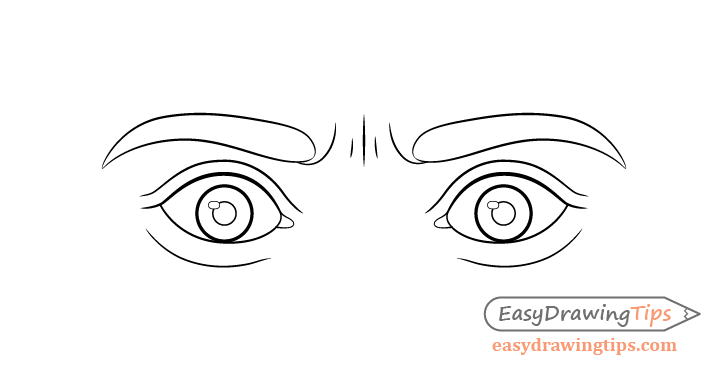
Draw the pupils in the middle of the irises and add the highlights slightly overlapping their outlines.
Step 6 – Add Shading
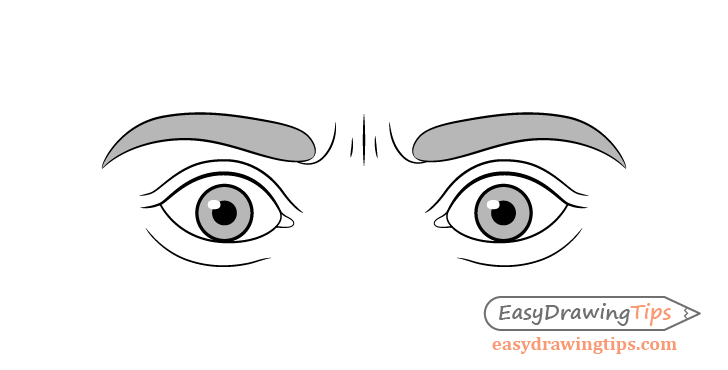
Darken your lines and add some basic shading as explained in the first example.
How to Draw Happy Eyes Step by Step
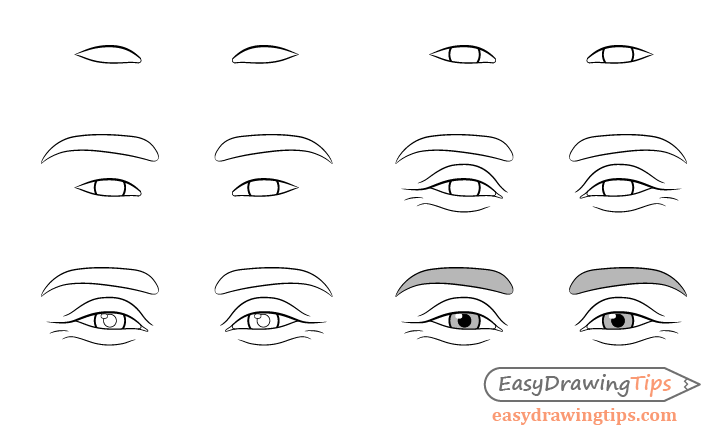
The “happy eyes” expression is created when a person is smiling. Although you don’t see the actual smile, the expression of the mouth will actually affect how you draw the eyes.
Step 1 – Draw the Outlines of the Eyes
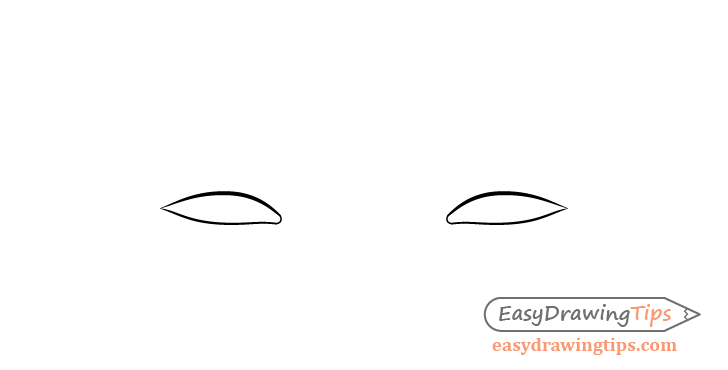
For this expression, draw the eyes much narrower than normal.
Step 2 – Draw the Irises
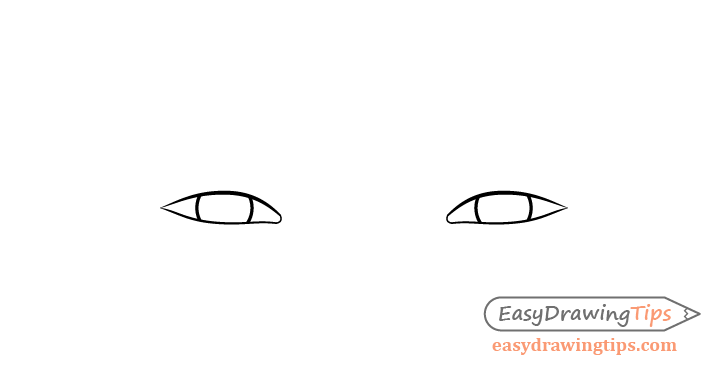
Draw both irises with a large portion of their tops and bottoms covered by the eyelids.
Step 3 – Draw the Eyebrows
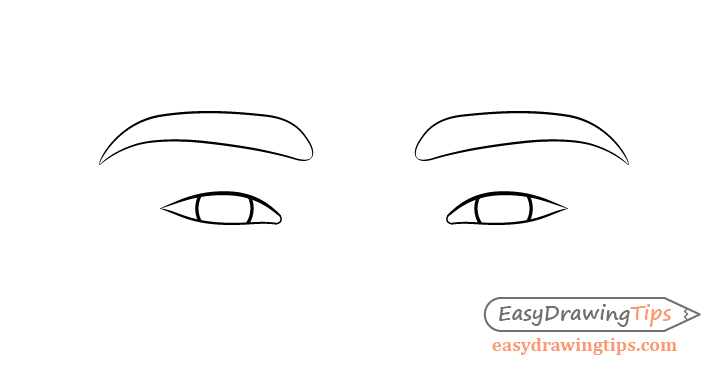
Draw the eyebrows in pretty much their natural state (same as for a normal expression).
Step 4 – Draw the Eyelids & Wrinkles

With this expression, the eyes will tend to have more wrinkles around them. This is due to the cheeks being raised, which causes the skin around the eyes to become compressed, creating folds.
Draw the top lines of the upper eyelids a tiny bit lower down than normal. Draw the bottom lines of the lower eyelids higher up. Also, extend the lines that define the whites of the eyes and the bottom of the upper eyelids to go further from the outer corner of each eye than you would for a normal expression.
To finish, add the wrinkles below the outer corner of each eye.
Step 5 – Draw the Pupils & Highlights

Inside each of the irises, draw the pupil and the highlight.
Step 6 – Add Shading

Finally, darken your lines by tracing over them and add some basic shading. You can again see the first example of the tutorial (the normal eyes) for more explanation.
How to Draw Tired Eyes Step by Step
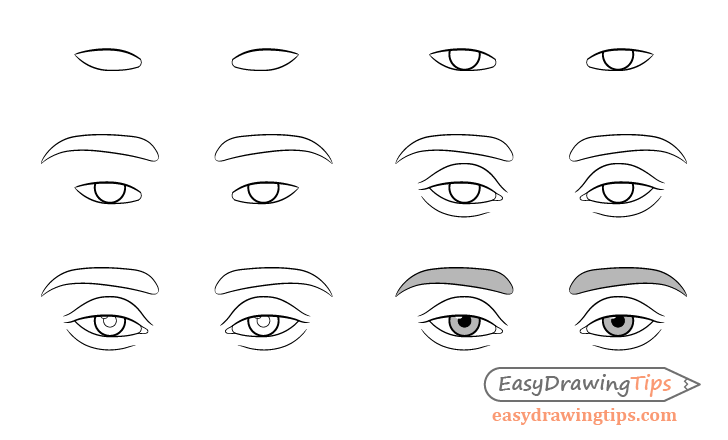
The final example is of eyes with what can be a tired or sad expression.
Step 1 – Draw the Outlines of the Eyes
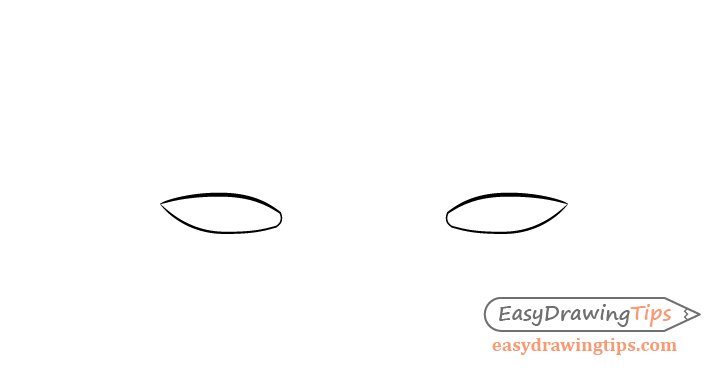
For this expression, draw the whites of the eyes with the upper part compressed downwards.
Step 2 – Draw the Irises
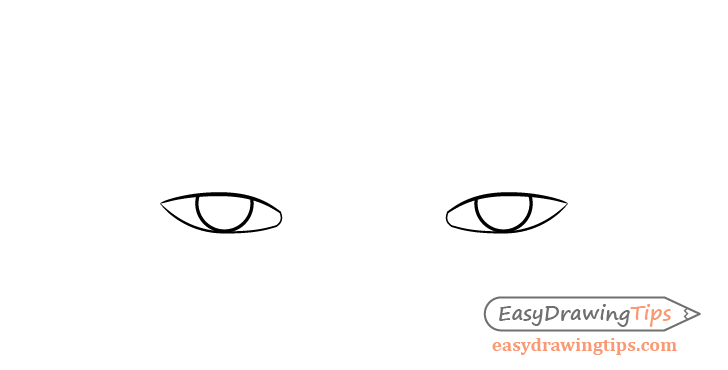
Draw the irises with their tops significantly more covered by the eyelids.
Step 3 – Draw the Eyebrows
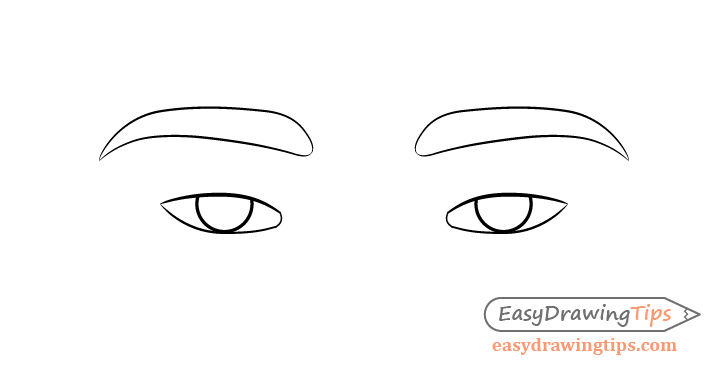
Draw the eyebrows in the same position as for a normal expression.
Step 4 – Draw the Eyelids

Draw the eyelids the same as for the normal state of the eyes.
Step 5 – Draw the Pupils & Highlights

Inside each iris, draw the pupil and part of a highlight. About half of each highlight should be covered by the eyelids.
Step 6 – Add Shading

To finish, trace over your lines with a darker stroke and add some basic shading.
Conclusion
Some eye expressions can be shown in different ways. In addition to that, the shapes of eyes can also vary among different people. However, this tutorial still provides a good general guide for achieving some of the most common expressions of the eyes.
Whatever emotion you are trying to draw, try and think of how the eyes, eyelids, and eyebrows will move or shift when making it and where wrinkles might form. It can, of course, also be helpful to look at some photos or ask someone to pose for you.
If you enjoyed this tutorial and would like to try some more like it, also see:
- How to Draw a Male Face Step by Step Tutorial
- How to Draw a Female Face Step by Step Tutorial
- How to Draw a Smile Step by Step
- How to Draw Different Types of Lips
- How to Draw Different Nose Types