How to Draw Hair Step by Step Tutorial
This tutorial shows how to draw female hair with 3 different hairstyle variations, including natural-looking, straight, and curly hair. Each style includes step-by-step drawing examples and explanations.
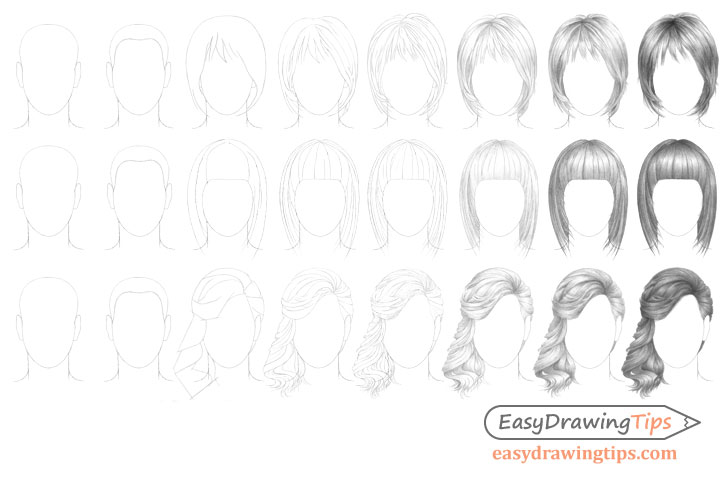
The examples provided in this guide illustrate how to create an outline of the hair based on the shape of the head and then demonstrate how to apply shading to the drawing. In addition to simply showing how to draw these particular hairstyles, the guide goes over a lot of the core principles of drawing hair in general.
If you are going to follow along, it’s recommended that you do so using a pencil and paper.
Be sure to start drawing with very light lines, as you will need to erase parts of them in some of the steps. Light lines will also make it much easier to correct mistakes. The lines in the examples have been made slightly darker just so that they are easier to see.
Also, please note that regardless of which hairstyle you want to draw, it’s recommended that you read over the instructions for the first example, as they provide the most in-depth explanations. The other styles have shortened breakdowns to avoid repetition.
Supplies Needed for Drawing Hair
- Regular Pencils: An HB pencil for the initial line drawing and 2B to 4B (softer) pencils for the shading.
- White Paper: Drawing or standard printer paper.
- Eraser: A kneaded eraser can be helpful for precision corrections to the shading, but a regular vinyl or rubber eraser is also fine.
How to Draw Natural-Looking Hair Step by Step
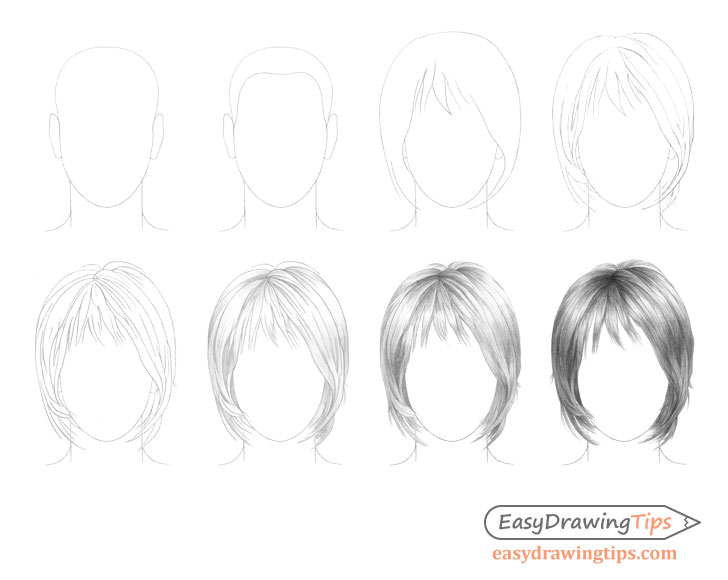
This first example shows how to draw fairly natural-looking hair with a length that goes slightly past the chin.
Step 1 – Draw the Head
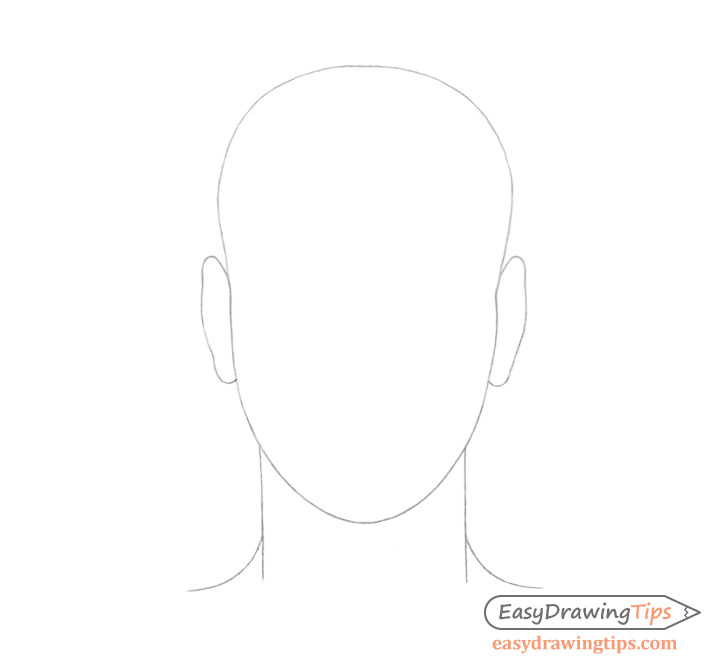
Begin the drawing with an outline of the head, the neck, and the ears. Doing so will allow you to better estimate the shape and volume of the hair, while making it easier to avoid mistakes.
For positioning the ears on the head see:
How to Draw a Female Face Step by Step Tutorial
Step 2 – Draw the Hairline
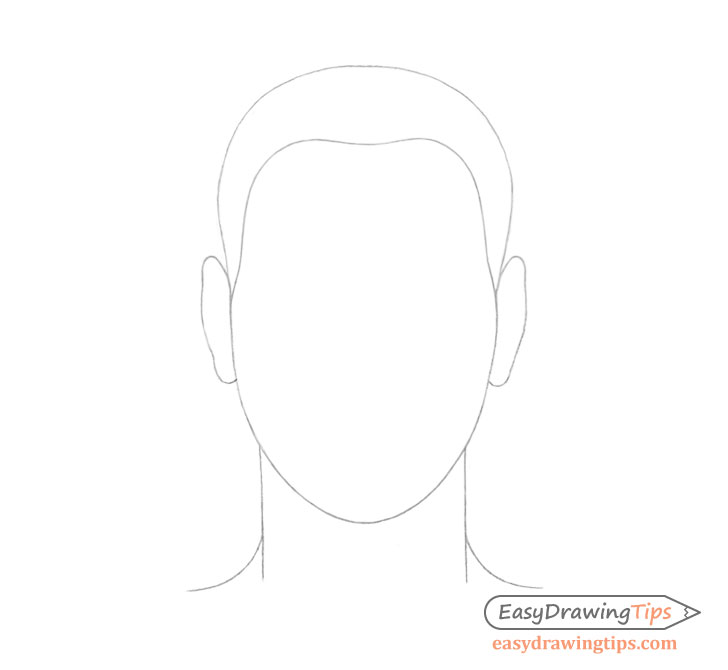
Define the hairline a short distance down from the top of the head. Knowing its position can, again, help you avoid mistakes, like having hair splits and hair locks that go too far up.
The shapes of hairlines can somewhat vary, but generally you can define it as in the example where it has a “dip” at the upper middle, then curves up into the temples and down the head on each side before finally sloping into the ears.
Step 3 – Draw the Outline of the Hair
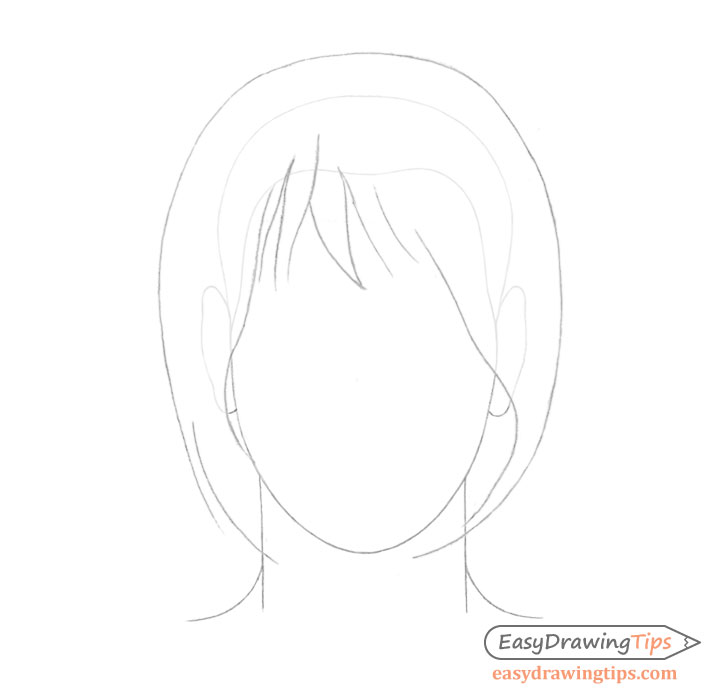
See-Through Drawing: Treat the hair as transparent and draw it directly over the outline of the head.
Shape and Volume: Focus on capturing the hair’s overall form and volume. Also, sketch the largest locks that help define its outer shape leaving the finer details for later steps.
Medium-length hair tends to “hug” the face. Draw it curving inward around the face as it runs past the ears.
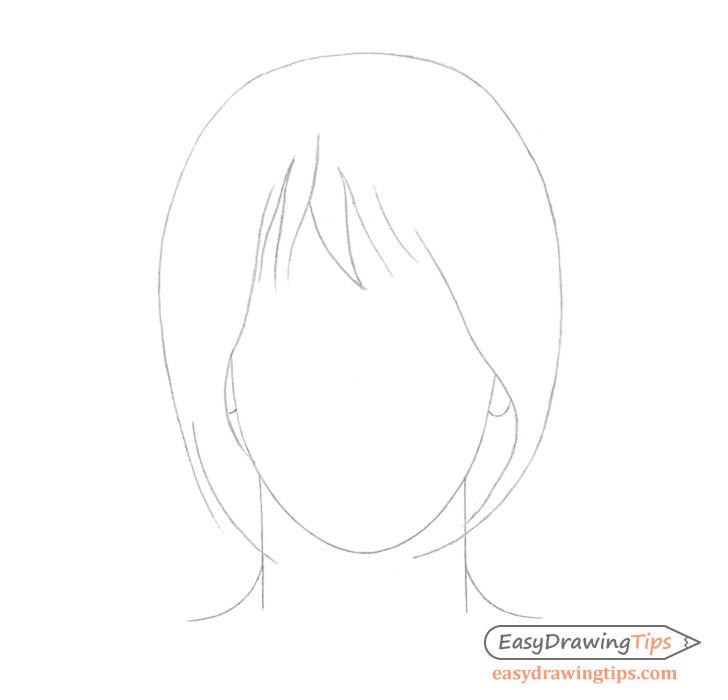
Erase the parts of the head covered by the hair after completing this step to avoid cluttering your drawing. You can also erase the hairline.
Step 4 – Add the Smaller Hair Locks
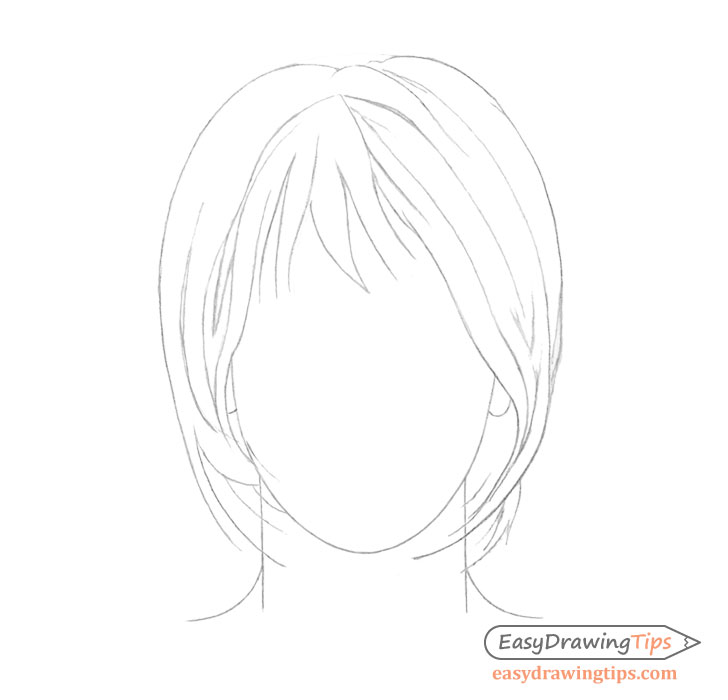
Parting Line: Show the parting line in the hair by adding a split into the upper outline.
Flow Lines: Add the major flow lines running down from around the parting line area to give the hair direction.
Hair Locks: Add the rest of the larger hair locks.
Erase parts of the outline from the previous step as needed when adding the above.
Step 5 – Finish the Line Drawing
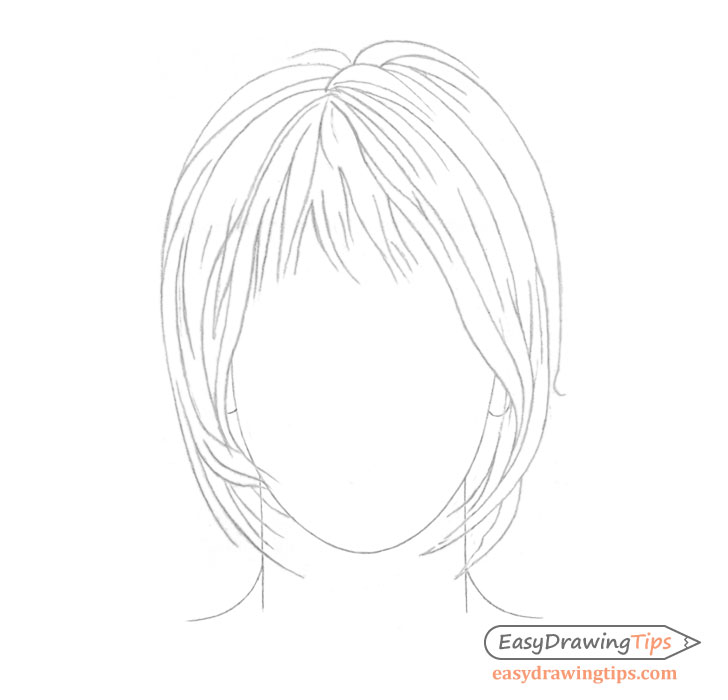
Once the larger and most important parts of the hairstyle are outlined, add splits along the ends of the hair locks and a few more flow lines. Also, add some shorter lines inside the various hair sections to create hints of hair strands.
You should eventually have a line drawing with a good amount of detail similar to the example above. However, as the drawing will be shaded, you don’t need to define every little hair split at this stage.
Step 6 – Begin Shading
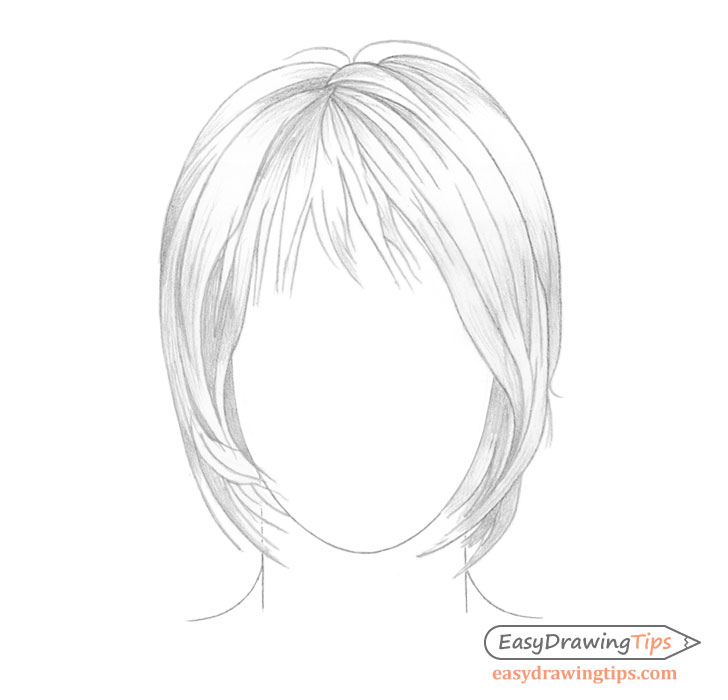
Light Source: Before shading, establish the lighting conditions for your subject. The examples in this tutorial assume a generic, well-lit environment with most of the light coming from above.
This particular example has shadows around its parting line area (cast down by the slightly raised hair locks). It also has shadows along the back section of the hair around the neck (due to the area being so closed off).
The light areas consist of a streak along the forehead, as well as any upward-facing curves, such as some locks around the ears and the inner ends of the curves near the lower part of the head.
The midtones are primarily around the hair’s middle section.
Please note that all of the described areas may be easier to see in the next set of steps.
Directional Shading: Apply the shading so that it flows along the direction of the hair locks. Keep your strokes visible by leaving a small amount of space between them to create the appearance of individual hair strands.
Value Mapping: Apply an initial layer of shading to map out the light, medium, and dark areas of the hair. Keep this initial layer lighter than the values you intend to have in the finished drawing. This can help you avoid mistakes such as going too dark on the midtones, leaving your pencils without enough value range to create the proper contrast with the shadows.
Step 7 – Intensify the Shading
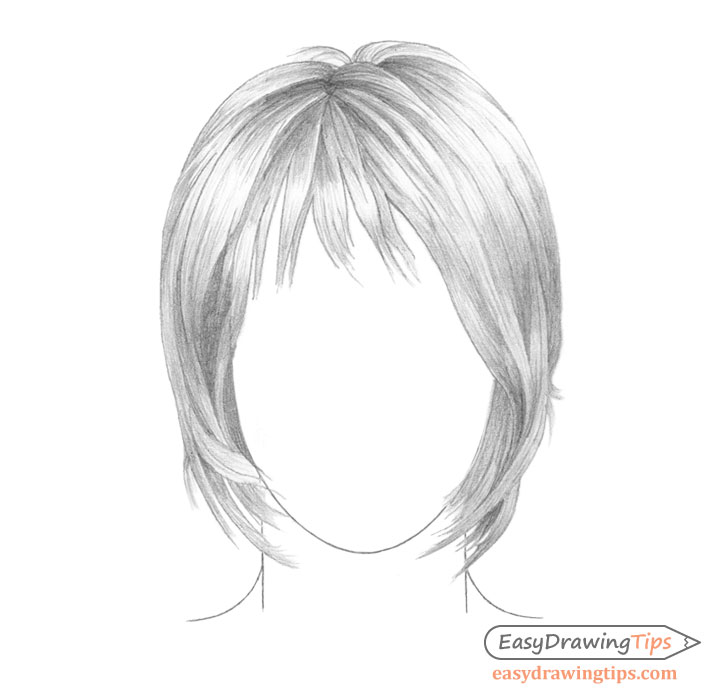
Darken the Shading: Apply more layers of shading to build up the values. Go over the light areas with barely visible strokes, and intensify the shadows with softer pencils, such as a 2B to 4B. Also, darken the midtones to maintain a proper balance.
Smooth the Transitions: Create smoother transitions between the different value areas of the hair.
Step 8 – Finish the Hair Drawing
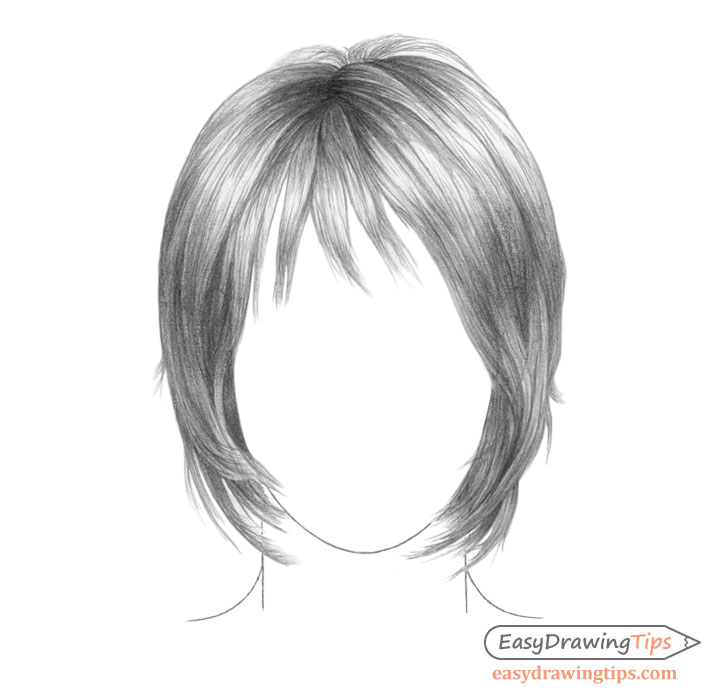
Refine the Shading: Further darken and refine the shading to create a good balance between the various areas of the hair. Be sure to maintain visible strokes along the light and midtone areas.
Troubleshooting Tip: If you happen to make any area of the shading too dark, use a kneaded eraser or the sharp corner of a regular eraser to lighten the area. If a regular eraser gets too worn, you can simply cut it to again get a sharp edge.
Add the Details: Make some quick pencil strokes on the tips of the various hair locks to create the appearance of individual hairs. Do this by first pressing harder on the pencil and then quickly pulling it away from the paper. This will help give the hair a softer and more natural look.
How to Draw Straight Hair Step by Step
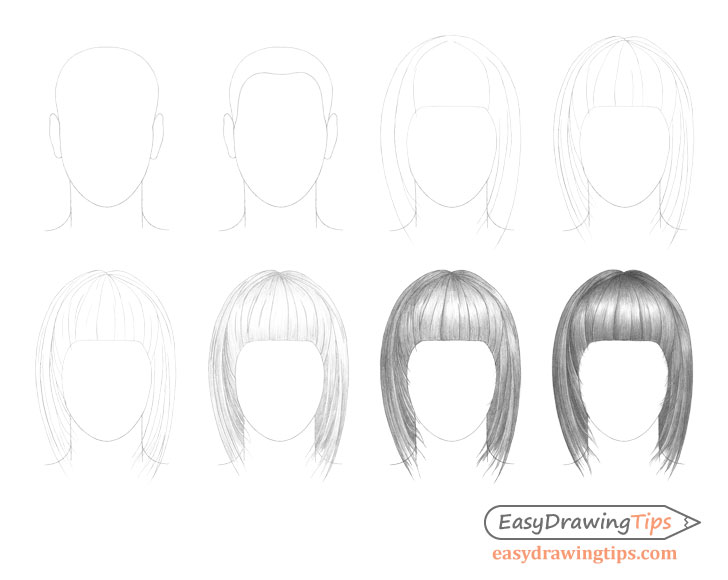
This example demonstrates how to draw straight, neatly combed hair that goes slightly past the shoulders.
Step 1 – Draw the Head
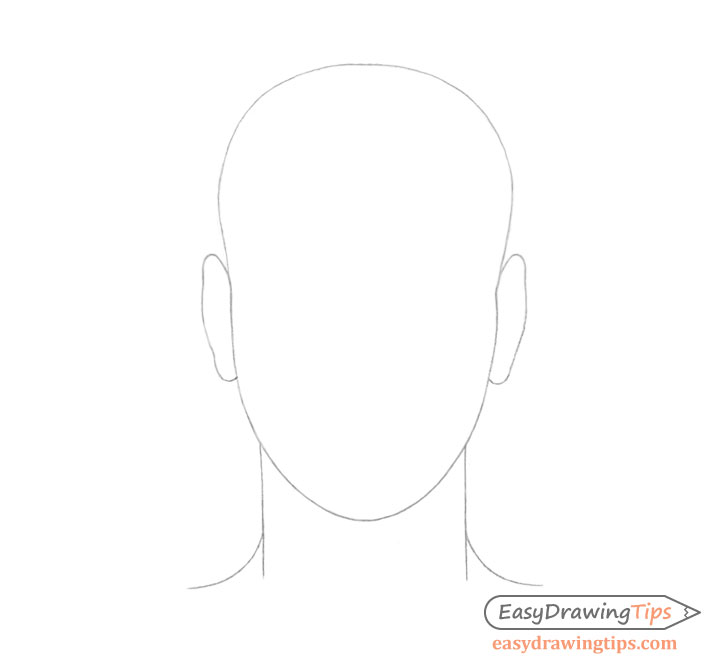
As in the previous example, begin by making an outline drawing of the head.
Step 2 – Draw the Hairline
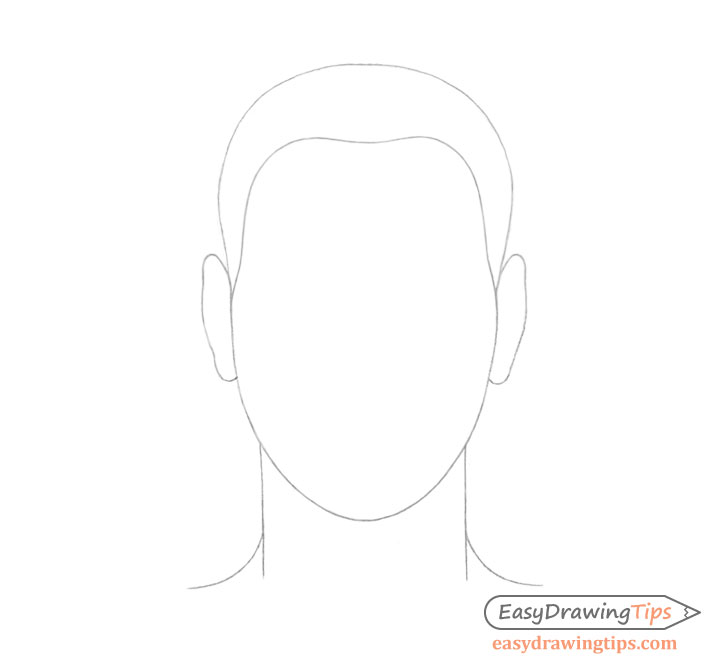
Again, as in the previous example, define the hairline with a “dip” in its middle that then curves up into the temples and down the head on each side before sloping into the ears.
Step 3 – Draw the Outline of the Hair
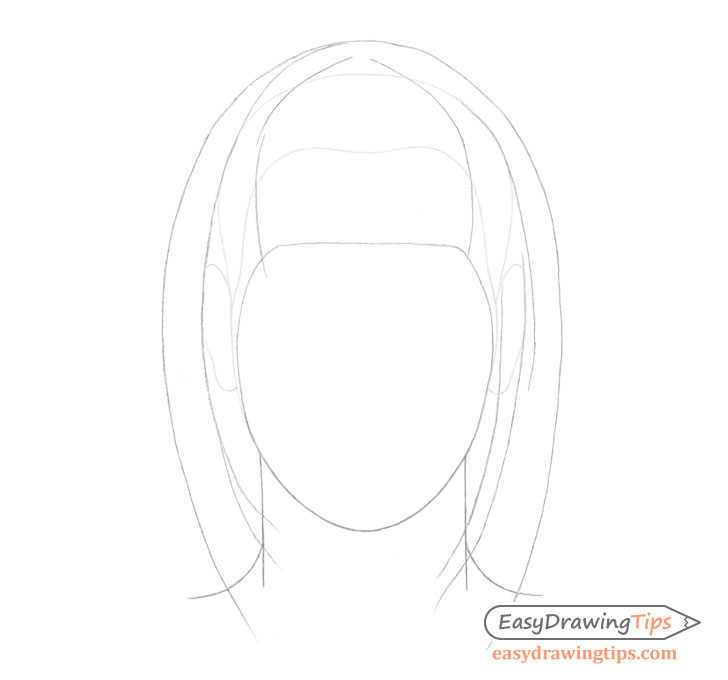
See-Through Drawing: Draw the hair over the outline of the head as if it were transparent.
Shape and Volume: Establish the overall shape and volume of the hair without any of the smaller details.
Similar to the first example, this hairstyle somewhat “hugs” the face, curving around it as it runs down. However, due to the hair being longer, more weight pulls down on it and it will not be as pronounced.
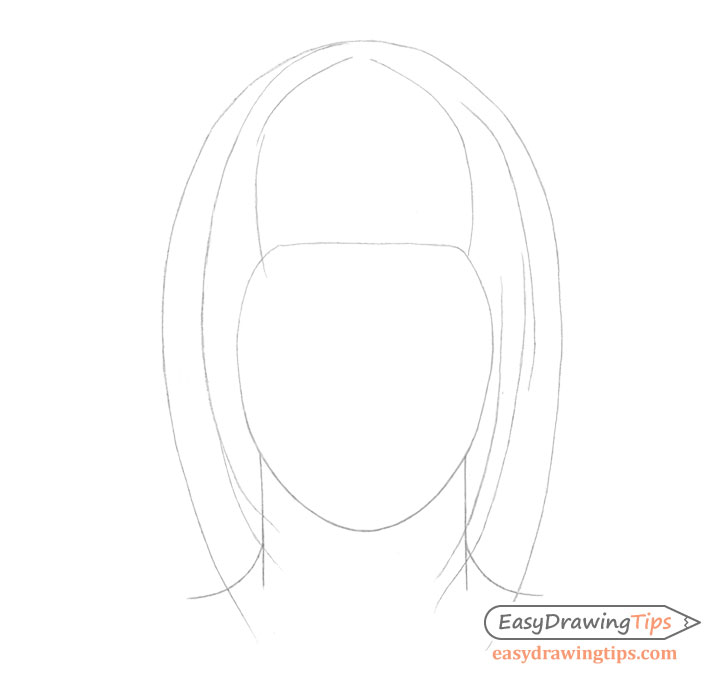
Erase the parts of the head (including the hairline) that are hidden by the hair once you’ve defined its shape.
Step 4 – Add More Details
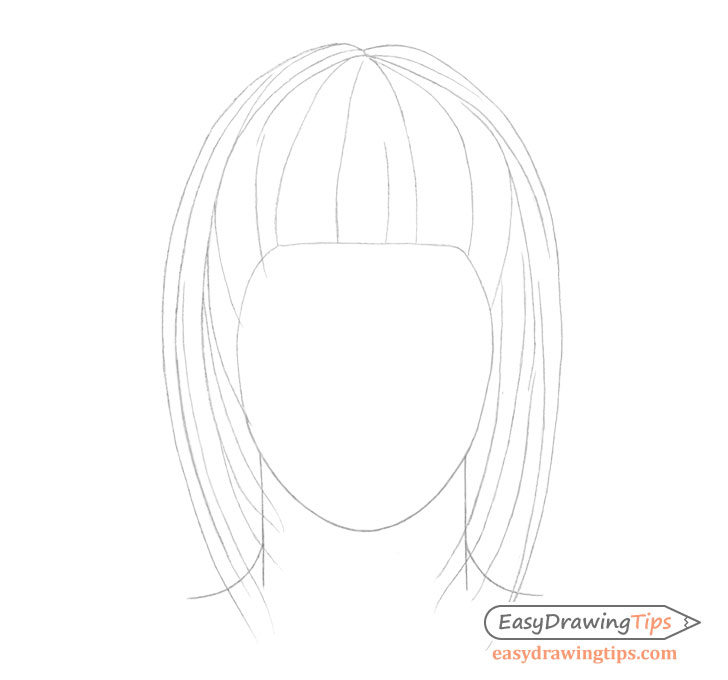
Parting Line: Show the hair’s parting line by adding a split into the top of its outline.
Flow Lines: Add the major flow lines running down from the parting line to give the hair direction. For straight hair, define these with fairly smooth curves.
Hair Locks: Define some of the larger hair locks.
Erase parts of the outline from the previous step as needed when adding the above.
Step 5 – Finish the Line Drawing
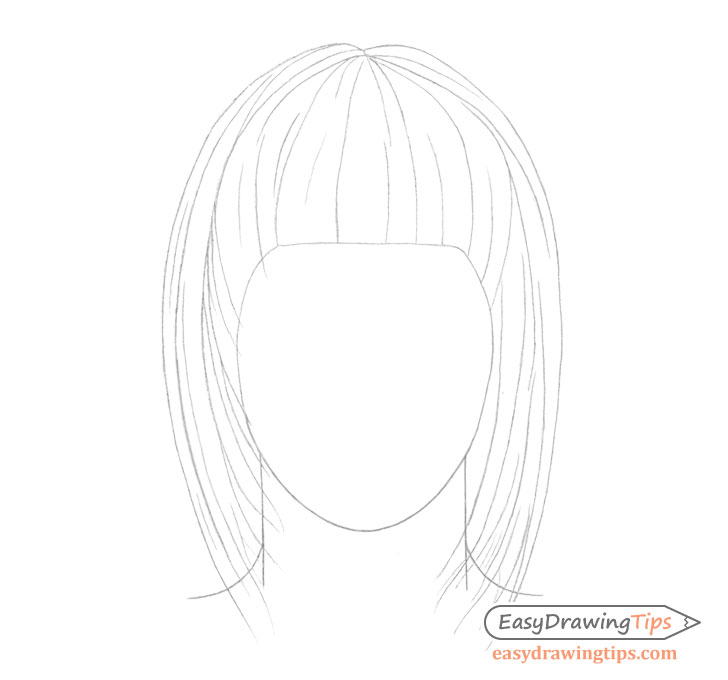
Complete the line drawing by adding smaller splits along the tips of the hair locks and some more flow lines.
Add the rest of the details through the shading process, as explained in the next set of steps.
Step 6 – Begin Shading
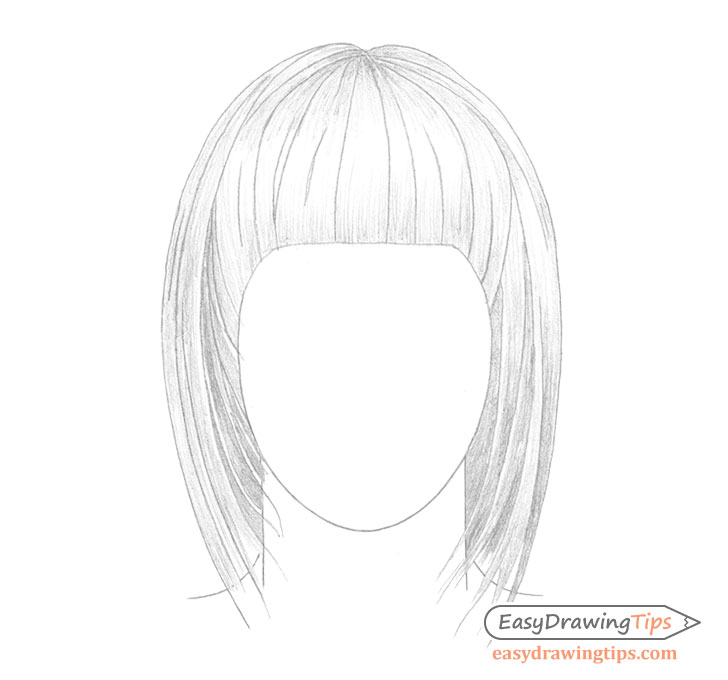
Light Source: As already mentioned, all of the examples in this tutorial assume that the subject is in a well-lit environment with an overhead light source.
In this example, the hair has a dark spot around its parting line that gradually dissipates. This occurs because the hair strands in that area fan out in multiple directions, creating tiny gaps between them. These gaps essentially absorb some of the light, creating a darker patch that you would not see on a more solid surface.
There are also shadows along the back section of the hair (around the neck), due to the area being so closed off. Finally, there are also shadows along the outer sides of and in between the hair locks on the lower half of the hair, created by them curving away from the light. Some of these may be more obvious in the follow-up examples.
The light areas consist of a streak along the forehead, as well as along the lower inner ends of the hair lock curves, as these face upward toward the light. The remaining areas are generally the midtones.
Directional Shading: The hair in this example is much more unified than in the previous one. Apply the shading so that the strokes go with the direction of the overall hair flow. Keep your strokes visible by leaving a small amount of space between them to create an effect of individual hair strands.
Value Mapping: Keep the initial layer of shading much lighter than what you wish to have in the final drawing. The goal of this stage is to create a “shading map” that positions the light and dark areas.
Step 7 – Intensify the Shading
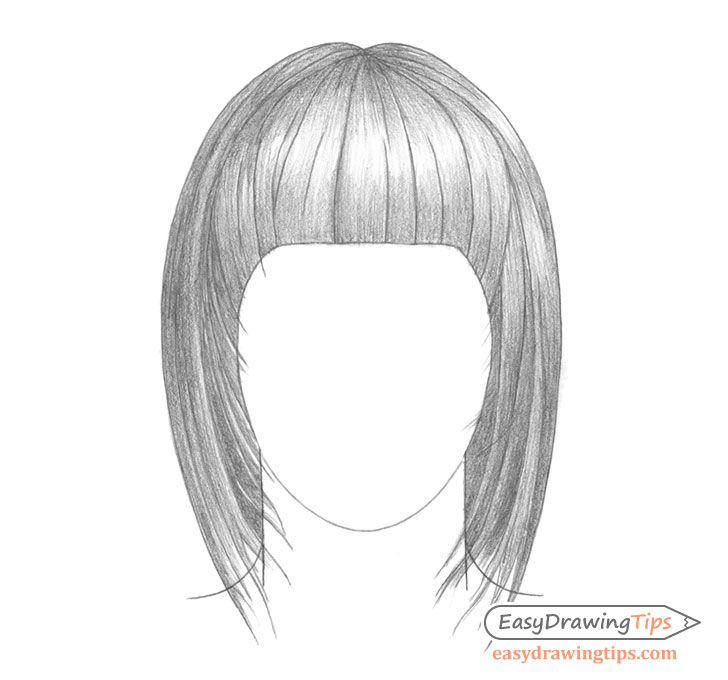
Darken the Shading: Apply more layers of shading to build up the values. Use soft pencils like 2B to 4B to darken the shadows. Also, proportionally darken the midtones.
Smooth the Transitions: As this hairstyle has a fairly solid shape, with a smooth overall hair flow, you want to create smooth gradients between the light and dark areas.
You can also start adding some strokes curving downwards from the hair’s side sections that overlap the sides of the face. These are explained in the next step.
Step 8 – Finish the Straight Hair Drawing
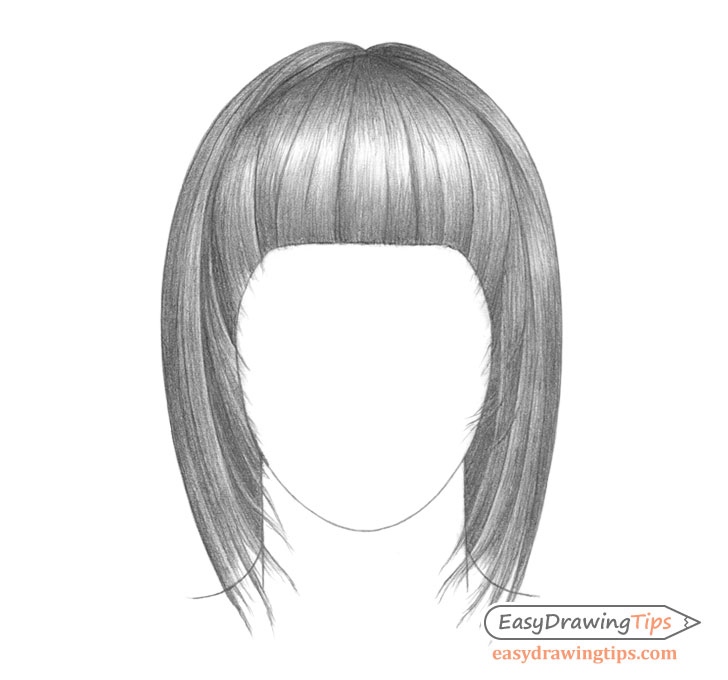
Refine the Shading: Further darken the shading with additional layers. Be sure to maintain visible strokes along the hair’s light and midtone areas. However, make them less obvious than in the previous example to give the hair a smoother look.
Add the Details: Add more pencil strokes from the inner sides of the hair. Do this by first applying a good amount of pressure to the pencil and then quickly pulling it away from the paper. These strokes will help create the effect of individual hairs.
How to Draw Curly or Wavy Hair Step by Step
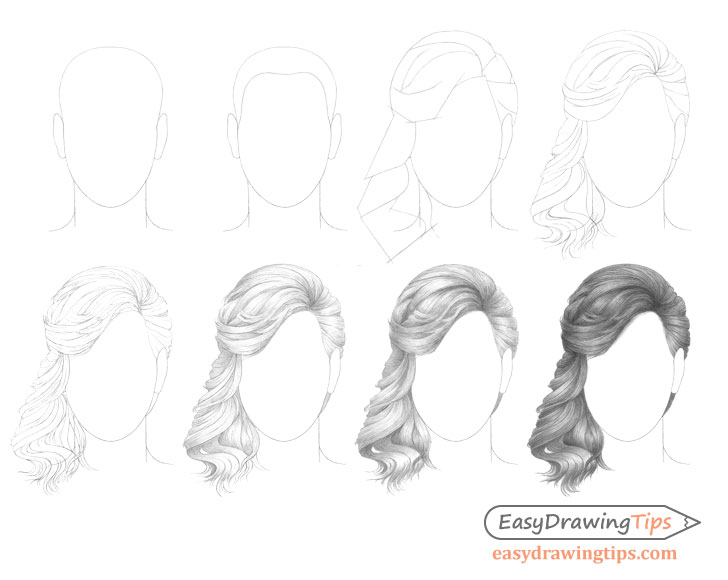
This example demonstrates how to draw curly hair that is swept to one side and runs down slightly past the shoulder.
Step 1 – Draw the Head
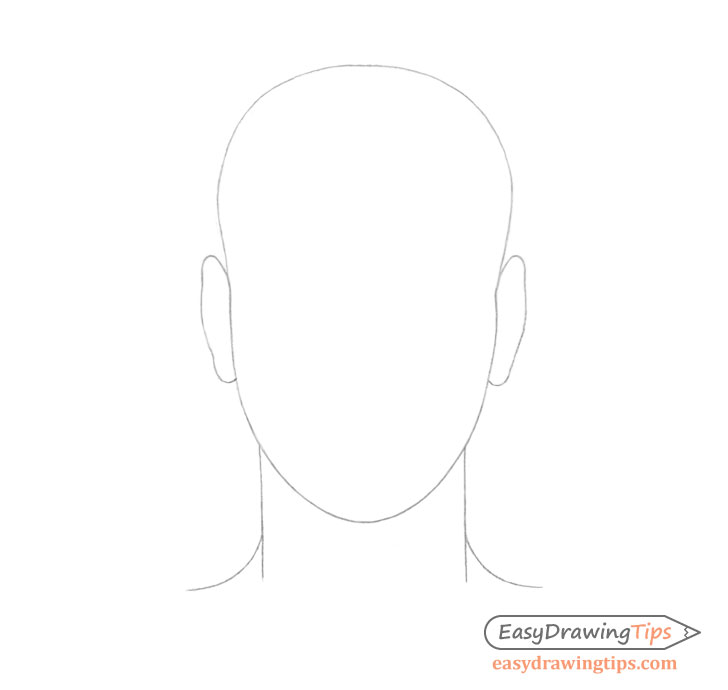
As with the other examples, begin by drawing an outline of the head with the ears and neck.
Step 2 – Draw the Hairline
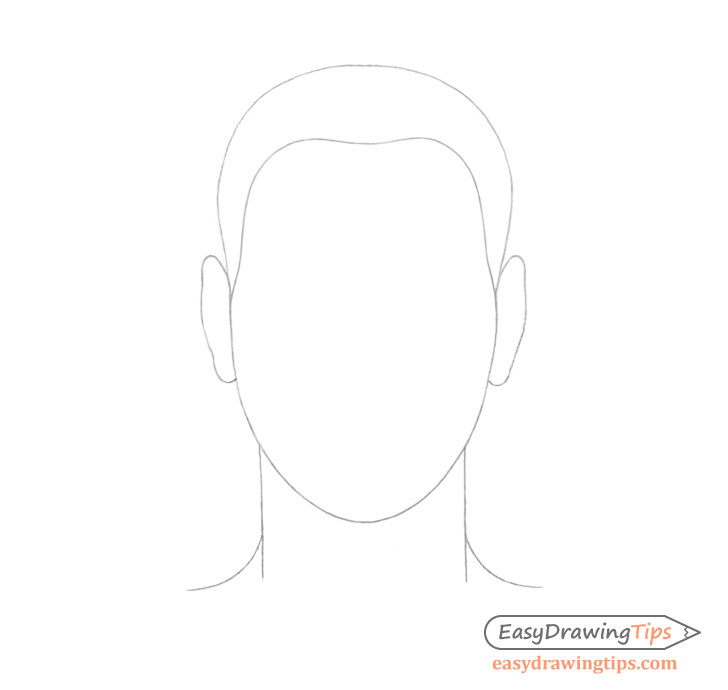
Unlike the previous two examples, the hairline is partially visible for this hairstyle, which makes drawing it much more important.
Position the hairline a short distance down from the top of the head. Define its shape with a “dip” at the upper middle, which then curves up into the temples and down the sides of the head before finally sloping into the ears.
Step 3 – Draw the Outline of the Hair
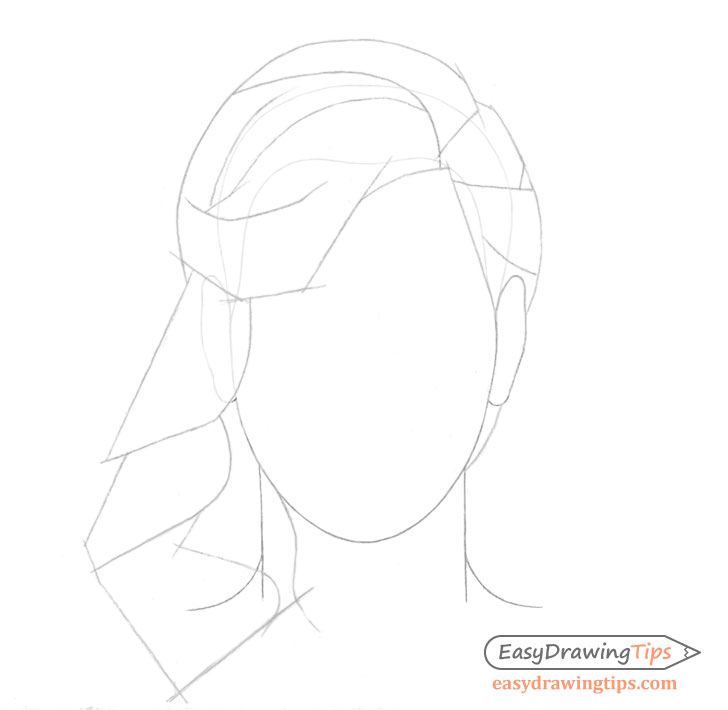
See-Through Drawing: Draw the shape of the hair right over the head’s outline, treating it as transparent.
Shape and Volume: Unlike the previous two examples, this hairstyle consists of several distinct sections rather than one easily defined shape. Frame these using a construction drawing, omitting all of the small details and simplifying their shapes by comprising them of straight lines and basic curves. Keep these lines very light.
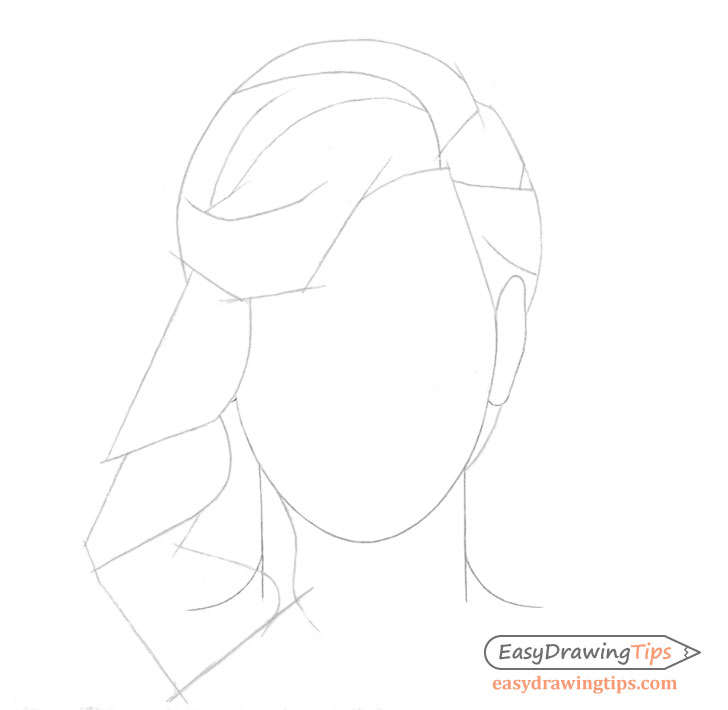
Erase the parts of the head and hairline that are covered by the hair after defining its basic shape.
Step 4 – Add More Details
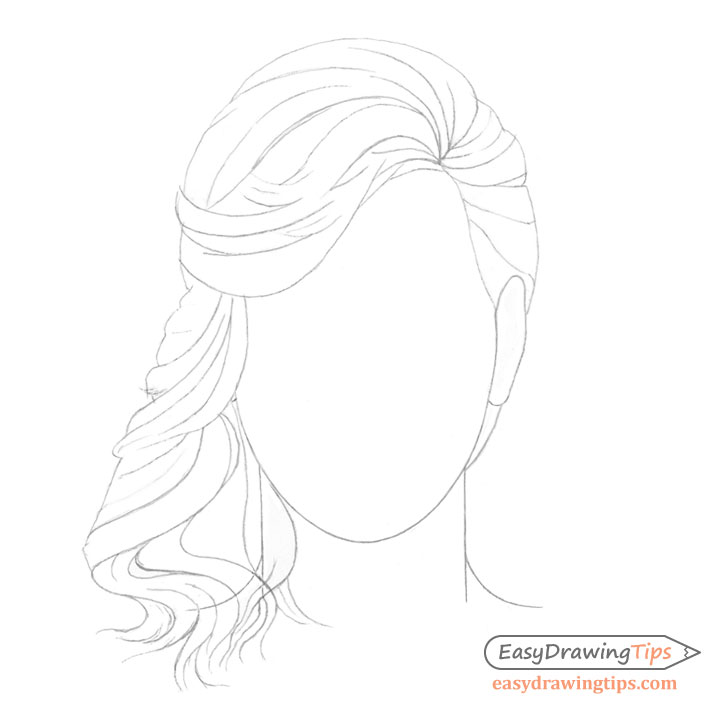
Based on the construction frame, create an organic outline of the hair. You will need to erase most of the construction lines as you do so.
Parting Line: In this case, the placement of the parting line has already been defined by the construction drawing. Based on that, outline the curve of its shape.
Flow Lines: Add the major flow lines running through the hairstyle’s sections. For curly/wavy hair, give these lines wave-like shapes.
Hair Locks: Define the hair locks with wavy shapes as well.
Step 5 – Finish the Line Drawing
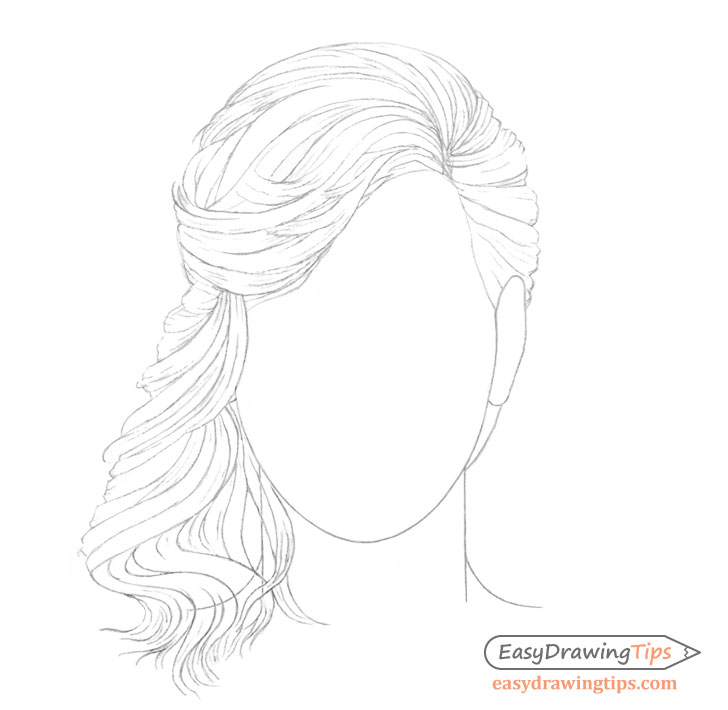
To complete this hairstyle’s line drawing, add more flow lines. Also, add hair splits to the ends of the bottom hair locks. Finally, draw some shorter lines in between the flow lines to create the effect of hair strands.
Step 6 – Begin Shading
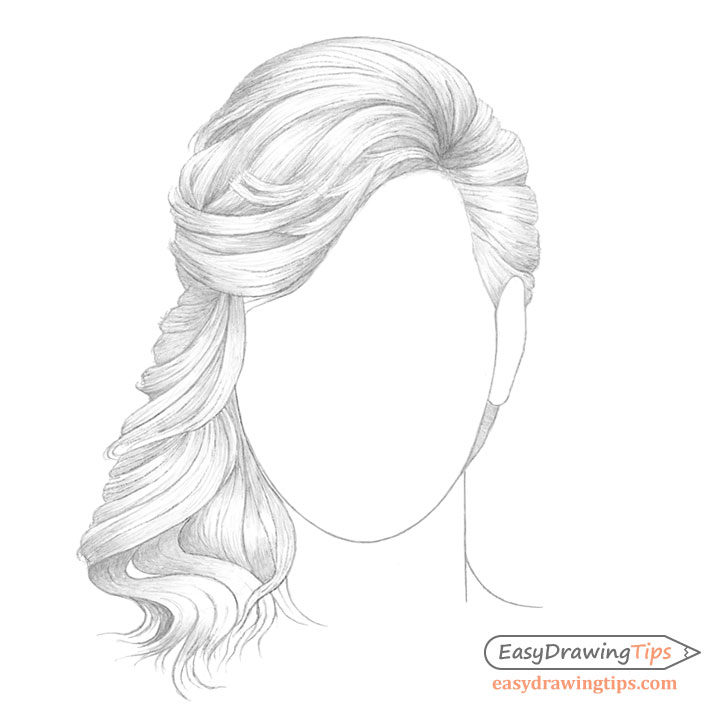
Light Source: As mentioned in the first example, all of the hairstyles in this tutorial assume that the subject is in a well-lit environment with the main light source positioned above them.
In this case, the hair has a shadow around its parting line that gradually dissipates. As explained in the previous example, this occurs because the hair strands around this area fan out in multiple directions, creating tiny gaps between them. These absorb some of the light, creating a darker spot in the hair.
The other shadows occur in various locations depending on whether or not a particular part of a hair curl is facing away from the light or has a shadow cast on it by another part of the hair above it.
The light areas are distributed in a similar manner to most of the shadows. They are along the parts of the curls that are facing toward the light.
The midtones are located in between the light and dark areas.
Directional Shading: To reinforce the flow of the various hair sections, apply your strokes so that they follow the directions of the curls. Also, be sure to keep these strokes visible to create a sense of individual hair strands.
Value Mapping: Make the initial layer of shading much lighter than what you intend to have in the final drawing. At this stage, the goal is to create a “shading map” that determines the distribution of the light, midtone, and dark areas.
Step 7 – Intensify the Shading
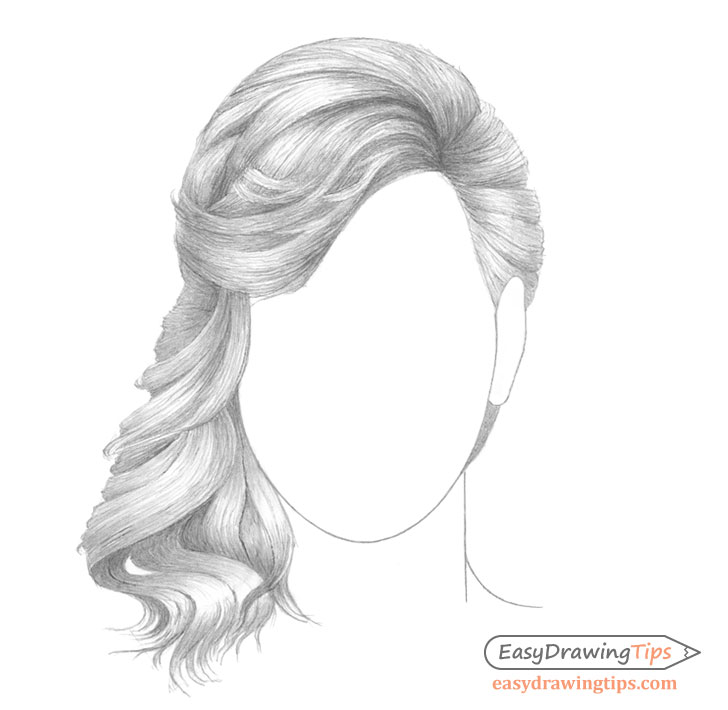
Darken the Shading: Build up the value by applying more layers of strokes. Use soft pencils, like a 2B to 4B, to intensify the shading along the dark areas and proportionately darken the midtones. Also, add slightly darker strokes along the light areas.
Smooth the Transitions: Smooth out the transitions between the different value areas of the hair. Make these transitions more abrupt along the sharper bends in the curls.
Step 8 – Finish the Curly/Wavy Hair Drawing
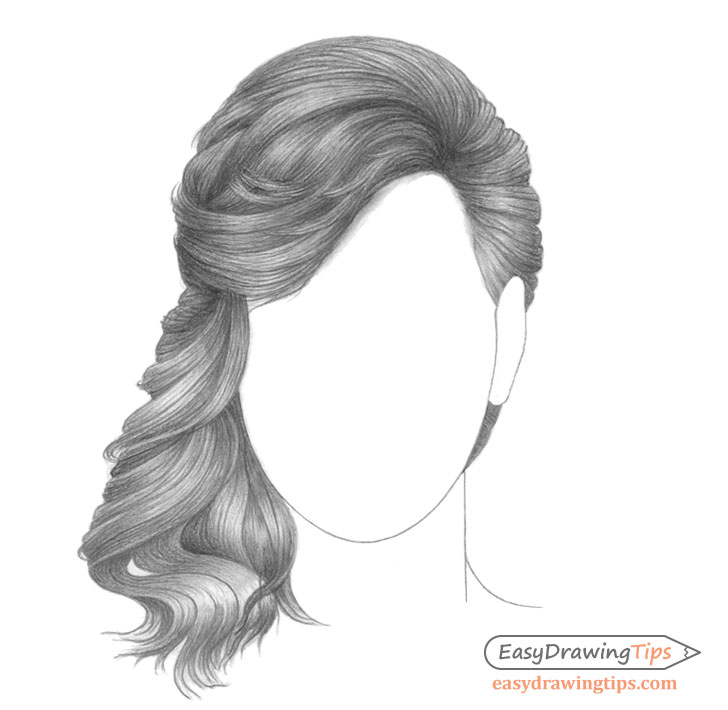
Refine the Shading: Darken the shading by applying even more layers of strokes, and be sure to keep them visible along the midtone and light areas. You can do so by pressing slightly harder on the pencil compared to when you were applying the previous set.
Add the Details: Draw some fairly dark, wavy lines into the shading to further emphasize the hair strands and highlight the waviness of the various hair locks.
Conclusion
This tutorial shows how to draw female hair using 3 different hairstyles, with an 8-stage, step-by-step breakdown for each of them. The examples go from simple outlines to realistic, pencil-shaded artwork.
In addition to simply showing how to draw these particular hairstyles, the guide also demonstrates some of the core overall principles of drawing hair, as well as art in general.
Hopefully, this guide helped you get a better understanding of this particular topic.
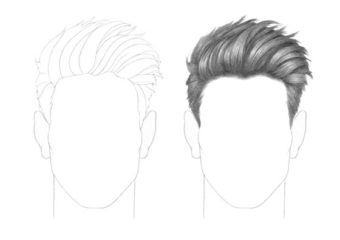
For drawing male hair, see:
How to Draw Male Hair Step by Step